Known for its beautiful landscape and often called a paradise, Dewata Island is home to some remarkable and occasionally dangerous snakes in Bali. Knowing the species will help you avoid dangerous reptiles that attack you during the trip.

This article covers all snake species you may find in Bali that are dangerous. So, learn about snakes in Bali to understand how to stay safe during your trip to one of the most beautiful islands in Indonesia.
Are Snakes Common in Bali?
Snakes are commonly found across Dewata Island. There are at least 50 land snakes and 18 species of water snakes. Several snakes in Bali are dangerous. However, you barely see the snakes in the tourist hotspot area.
The snakes live in the jungle, rice fields, shrubs, and rural areas. So, you can still find a safe place to stay away from wild animals in Bali. Choosing the right accommodation can help keep your holiday safe and reduce the risk of encountering venomous snakes in Bali.
Venomous Snakes in Bali: The Dangerous Species
Even though Bali is safe from venomous snakes, it is vital to be aware of the most dangerous snake species in order to avoid them. It is a precautionary measure for those visiting Bali’s natural environs.
1. Blue Krait (Bungarus candidus) – The Most Venomous
Blue Krait in Bali is one of the most venomous snakes. It has a specific physical appearance that is easily noticeable. The body is black with shiny blue and the circular white stripes. The body shape is cylindrical and slender, and it is active at night.
Avoiding this snake means understanding its habitat. Blue Krait often lives in rice fields, gardens, humid shrubs, and near rivers. Their habitat often becomes a holiday destination, so you have to be careful and pay attention to your surroundings.
The snake is one of the most dangerous snakes in Southeast Asia. The snake’s level of hazard is quite high because the bite can be lethal if it’s not treated properly. The first symptoms may be mild, but the paralysis grows quickly throughout your body.
The venom of the blue krait is neurotoxic, meaning it attacks the neurological system. It interferes with the nerve-muscle relationship. Once bitten, it might cause your body to become gradually paralysed, which could cause your breathing to stop right away.
2. Island Pit Viper – The Most Common Biter
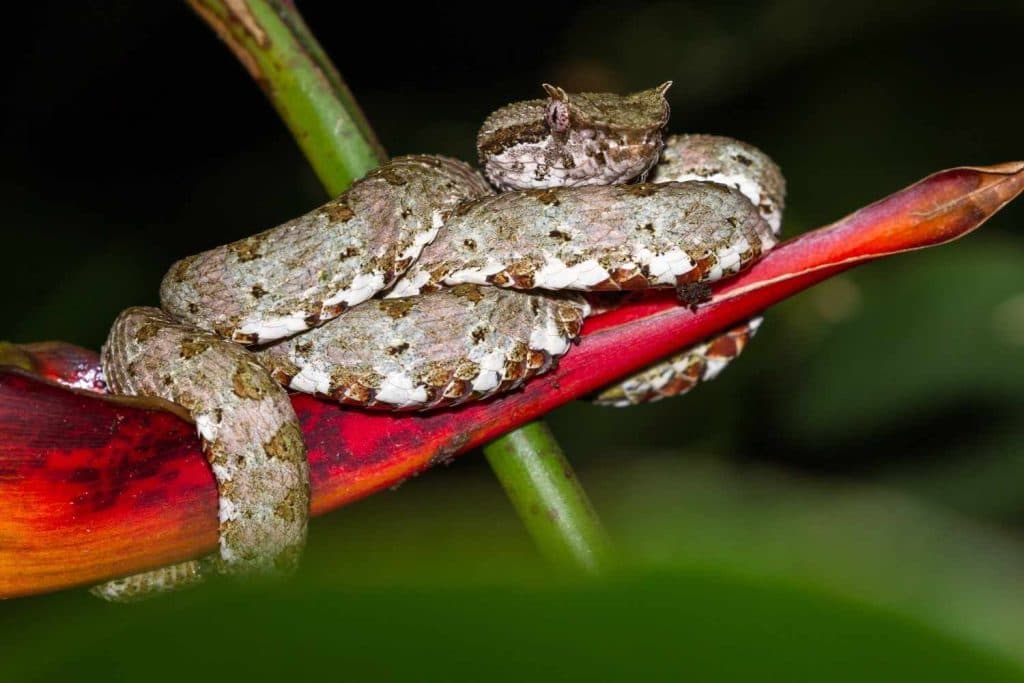
You may also find the Island Pit Viper in Bali. It is the most common biter, which often creeps into the natural surroundings of Dewata Island. The snacks commonly found in the Lesser Sunda Islands, like Bali, Lombok, Sumbawa, Flores, and Timor.
The Island Pit Viper is not really aggressive, but the population is quite high. It often lives near human settlements with good camouflage. Its colour may be vibrant green, turquoise, yellow, or a rare morph. It is what makes the snake look like a leaf, a moss, or a tree branch.
They have a favourite habitat around Bali. Usually, it lives in tropical jungles, gardens, rice fields, or humid shrubs. It is what makes the Island Pit Viper quite dangerous because their habitat is near where human doing their activities.
3. Malayan Pit Viper – The Aggressive One
Dewata Island is home to a variety of hazardous animals, including the Malayan Pit Viper in Bali. Unlike many snakes that retreat, the Malayan Pit Viper tends to remain perfectly still, making it easy to step on accidentally. It is the cause of the snake’s hostility.
The venom of the Malayan Pit Viper is hemotoxic. It can damage tissue, disrupt blood clotting, and cause internal and external bleeding. It will cause severe pain, quick swelling, or possibly tissue necrosis with shock if it bites.
4. Javan Spitting Cobra – Can Spit Venom
The Javan Spitting Cobra is found in Bali on Dewata Island, which boasts a stunning natural area. As the name suggests, the snake can spit venom, which is dangerous to human eyes. If it is not treated immediately, the corneal damage can lead to blindness.
Their habitat includes rice fields, dry bush, garden areas, the forest’s edge, and regions close to mouse-infested villages. So, the Javan Spitting Cobra is commonly found in Bali.
If you want to avoid this snake, you can use a flashlight at night and wear boots when trekking or walking in the bush. You can also avoid seeing the snake close-up because the snake may spit venom.
5. King Cobra – Rare but Formidable
The King Cobra in Bali is a rare snake to be found. It is formidable because it is considered the most venomous snake in the world. Snakes are completely defensive when being threatened.
The snake barely appears in the human settlements. They stay still in the tropical rainforest, bamboo forest, area near a river, or humid hills. Thanks to their natural habitat, the King Cobra does not come to the settlements.
Sea Snakes in Bali
6. Yellow-bellied Sea Snake
The yellow-bellied sea snake becomes one of the most frequent sea snakes in Bali. It is an unusual snake because it lives primarily in the sea and rarely ventures onto land.
Several common physical characteristics of the Yellow-bellied sea snake include that the upper body is black or dark brown. In addition, the underside of the snake is bright yellow, and the tail is flat and paddle-like for swimming.
The snake contains a potent neurotoxin, which is used to paralyse small fish. Humans experience muscle discomfort, paralysis, and breathing difficulty. However, humans have rarely been bitten by a yellow-bellied sea snake.
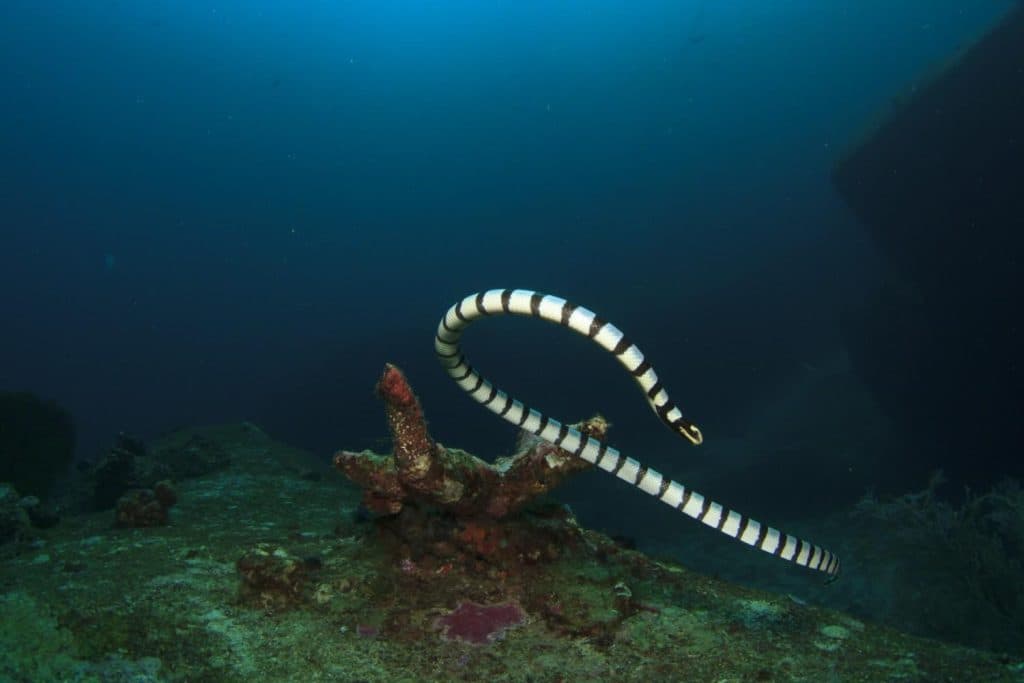
7. Banded Sea Krait
When visiting holiday destinations, like a trip to a place in North Bali, you have to be careful of the Banded Sea Krait. This snake stands out because it has black and white stripes.
This snake often comes to the land to rest or even lay eggs. So, you may find the snake in the land when you are visiting several coastlines in Bali, which requires you to be careful of it.
Unlike the shark in Bali, the Banded Sea Krait is not aggressive. They are barely attacking when it encounters humans, but you still have to avoid them in the sea. It prevents you from the venom that can make a muscle weakness due to its bites.
Harmless Snakes in Bali
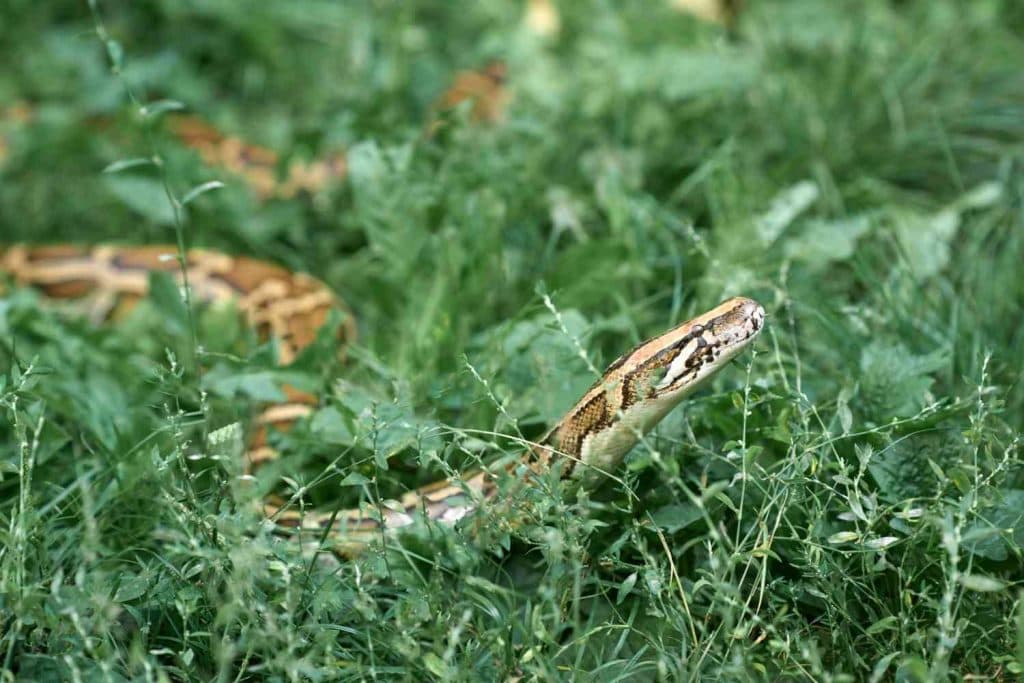
8. Reticulated Python
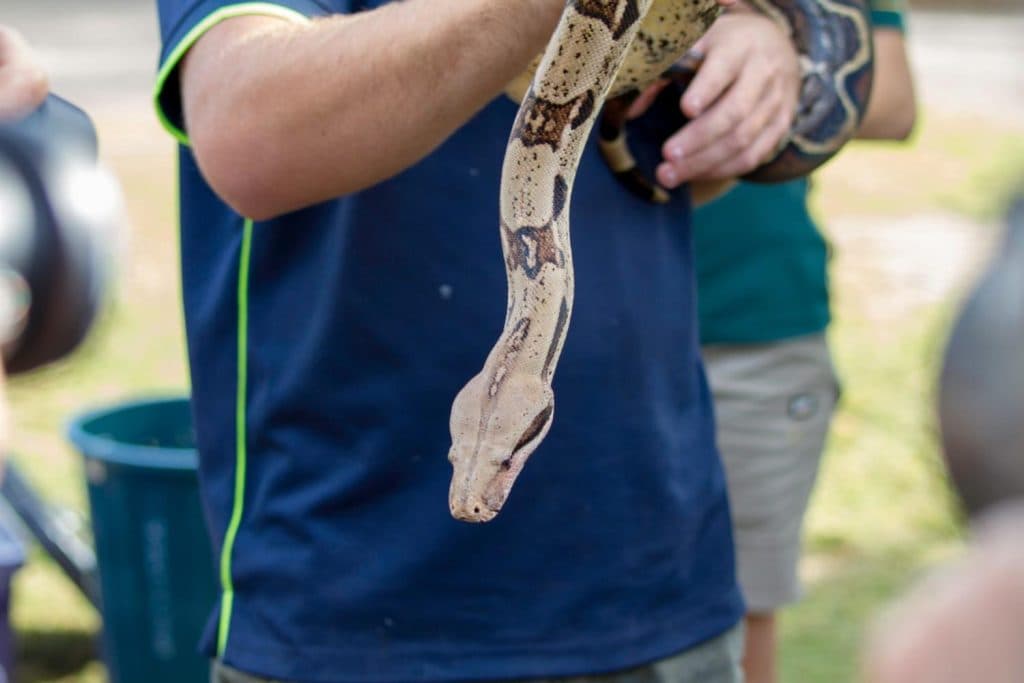
Reticulated Python is one of the harmless snakes in Bali. The snake stands out with gold, black, brown, and cream patterns. It also has a long, very muscular body compared to any other snake.
Their favorite habitats are in tropical jungles, rivers, hills, and rice fields. It also lives in settlements, which have a lot of mice. However, the snake is not dangerous because it does not attack humans.
9. Commonly Non Venomous Snakes in Bali: Rat Snakes, Tree Snakes
Rat Snakes, or even popularly known as tree snakes, are harmless snakes in Bali. The snake always avoids humans, so you will barely meet it. But it can be defensive when it is being threatened.
The snake benefits the ecosystem by helping to control mice, agricultural pests, and other rodent populations. Most farmers are letting the snake live in their rice fields to control the pests.
What to Do If You’re Bitten by a Snake in Bali
It is essential to know what to do if bitten by a snake in Bali. This step will help you get first aid, so the venom distribution can be controlled until you are injected with antivenom in the hospital.
1. Immediate first aid steps
The first step is to stay calm for Bali snake bite treatment. Try to breathe slowly and sit or lie down. Then, immobilize the limb with a towel, splint, or even a cloth. Remove all tight items, as swelling can become severe very quickly.
2. How to get to a hospital in Bali
For an emergency due to a snake bite, you can call 118 or 119 for an ambulance. Do not wait for the symptoms to worsen. So, going to the hospital immediately can help get injected with the antivenom.
3. Antivenom Availability in Bali
Major hospitals in Bali generally have access to Indonesian polyvalent antivenom. Even the hospital has emergency ICU support and ventilators for neurotoxic bites to treat the venom.
4. List of Hospitals
Knowing the list of hospitals is useful. Here is a list of hospitals for emergency cases involving snake bites.
Canggu:
- Siloam Medika Canggu: +62 361-934-8888
- Nusa Medica Clinic Canggu: +62 818-0590-0100
Uluwatu:
- BIMC Hospital Nusa Dua -Pathology: +62 361-3000-911
- BIH Emergency Medical Services: Emergency hotline 150919
Ubud:
- BIMC Ubud: +62 811-399-552
- Ari Canti Hospital +62 897-0477-534
Seminyak:
- BIMC Hospital Kuta Emergency Center: +62 811 3960 8500
- Siloam Hospitals Denpasar: 1-500-911
It is all the information for snake safety tips in Bali. Collective information must make it easier for you to get treatment after being bitten by a snake during the trip.
Conclusion
Despite being home to various snake species, Dewata Island remains one of the safest and most beautiful destinations in the world. With basic awareness, you can avoid encountering a snake, which makes the trip still enjoyable.
If you are planning to have a holiday in Bali with confidence, you can explore Ini Vie Hospitality accommodation as the safest place to stay. Explore your curated experience with us and have the most unforgettable trip afterwards.