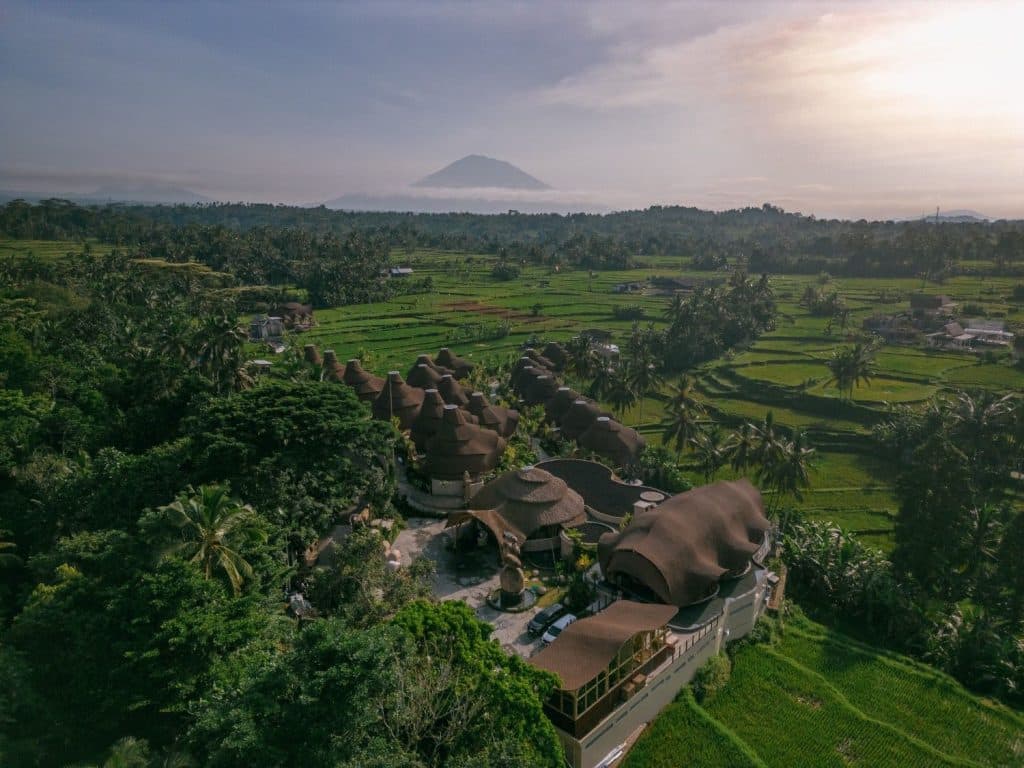
Mount Agung is one of the natural wonders you can enjoy on the island of Bali. Located in Karangasem Regency, this mountain is a favorite hiking destination among tourists for its stunning views and beautiful natural landscapes.

Beyond its natural beauty, this 3,142-meter-high mountain also holds deep spiritual value and a long-standing legacy for the local community. If you’re interested in visiting Mount Agung in Bali, read the guide below first to learn about its history, how to hike it, trail guides, safety routes, and tips.
The Sacred Significance of Mount Agung for the Balinese
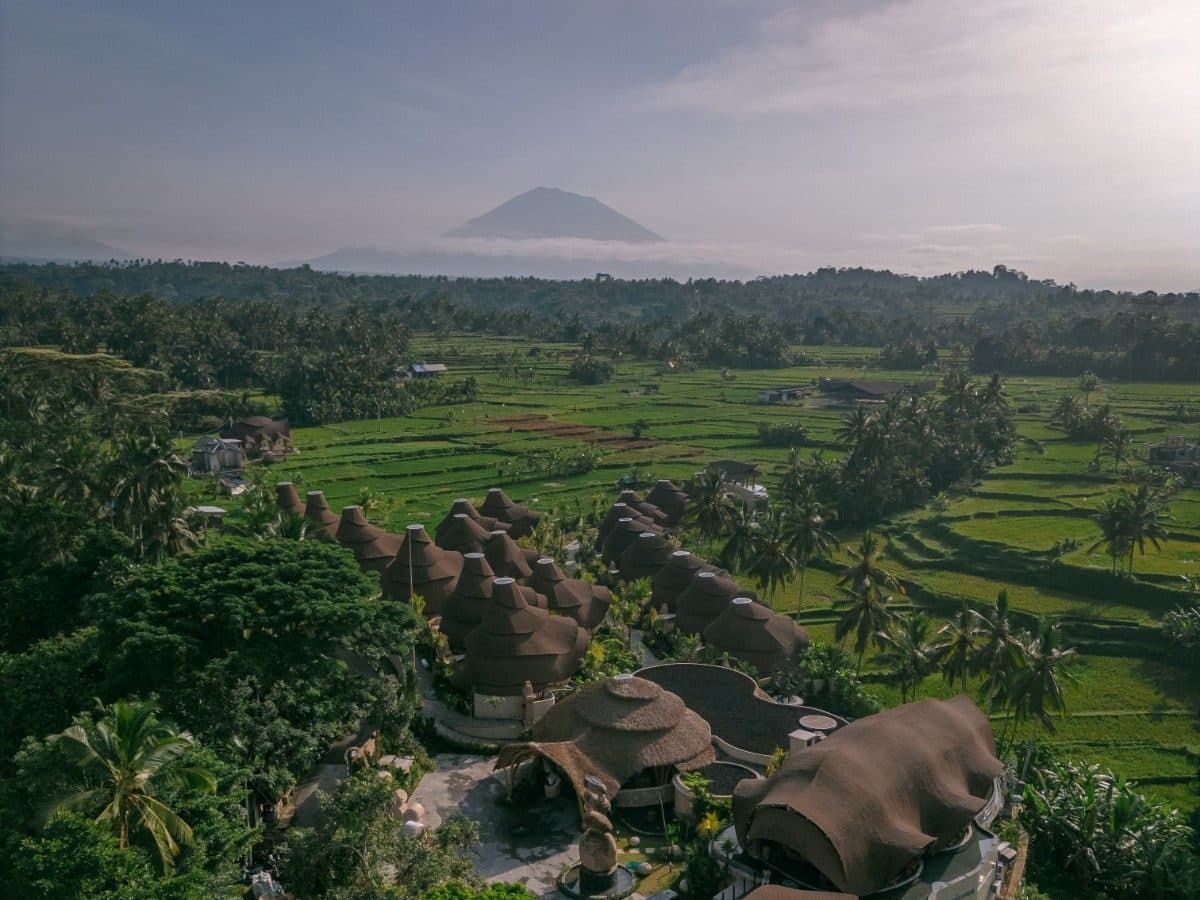
Mount Agung (Gunung Agung) is Bali’s highest active volcano, towering 3,142 meters above sea level in Karangasem Regency. It has a violent past, marked by a string of eruptions, including the 1963 blast, recorded as one of the deadliest in modern volcanic history.
But ask any local, and you’ll learn this mountain is far more than a striking geological feature. For the Balinese, this mountain is sacred ground, the dwelling place of the gods and the point where life itself is believed to begin.
The meaning of Mount Agung runs so deep that it shapes nearly every aspect of Balinese life, from generations-old legends and the direction homes are built to face the mountain.
- The Home of the Gods: According to the Lontar Kutara Kanda Dewa Purana Bangsul, an ancient palm-leaf manuscript central to Balinese Hindu belief, this mountain is called Gunung Toh Langkir, believed to be the seat of the god Mahadewa. Legend has it that Mount Agung is a fragment of Mount Mahameru’s peak, carried to Bali as an anchor to keep the island in balance. In keeping with that sanctity, Besakih Temple stands at the foot of the mountain, Bali’s holiest temple and the bridge connecting people to the divine.
- Every Direction Points to the Mountain: Step into any traditional Balinese home or temple, and you’ll notice something quietly deliberate. Everything faces kaja, the sacred direction toward the mountain, a spatial concept rooted in generations of reverence.
- A Sanctuary Carved Into the Landscape: Scattered across Agung’s slopes are some of Bali’s most important temples, including Pura Penataran Agung, home to the god Shiva. Once every hundred years, the island gathers here for Eka Dasa Rudra, a grand ceremony held to purify the entire universe.
- More Than Just a Mountain: To the Balinese, Mount Agung is a living lesson in harmony between people, nature, and spirit. That philosophy shows up in daily rituals, in the offerings left at its foot, and in the quiet respect locals continue to hold for the land believed to be home to the gods.
Can You Climb Mount Agung?
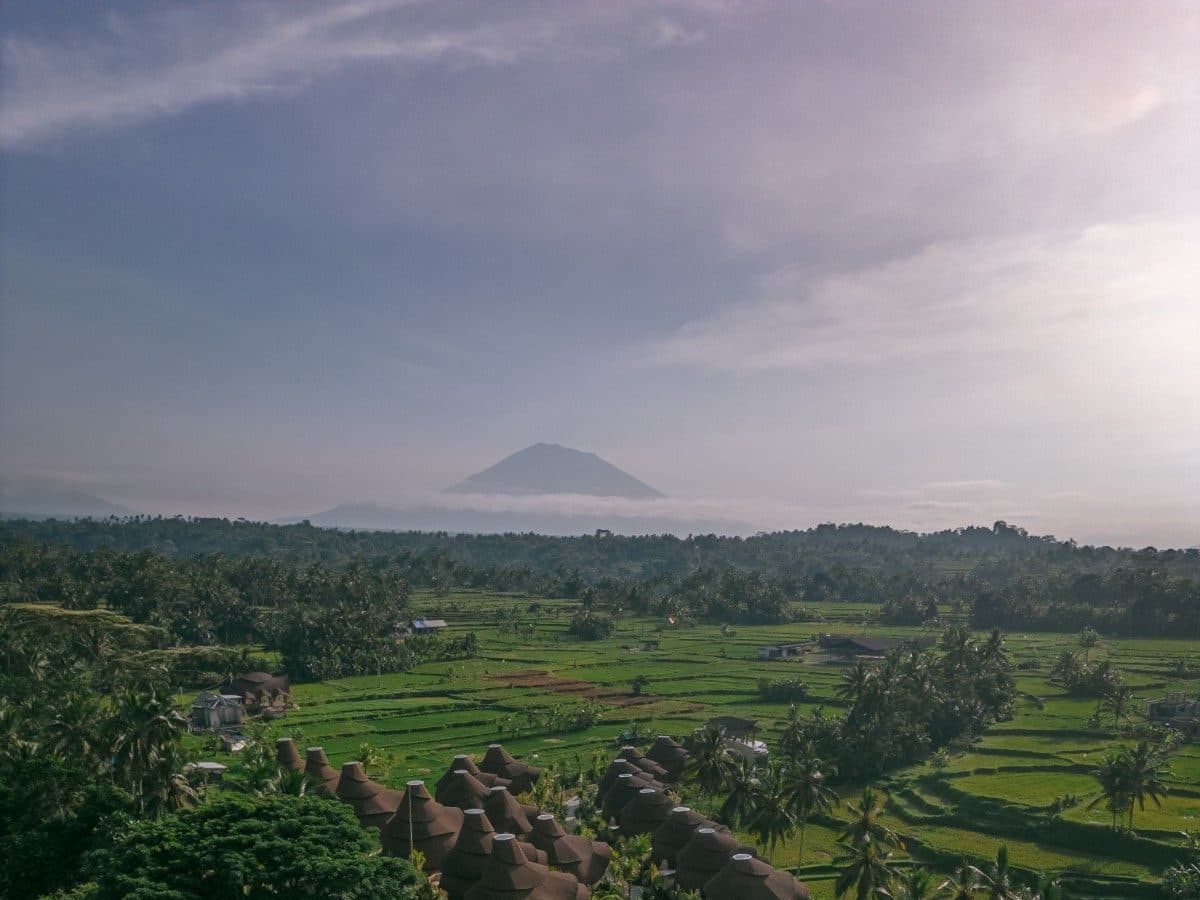
Although this mountain is held sacred by the local community, climbing Mount Agung in Bali is still allowed. The trail is open to the public, but under a 2025 circular from the Bali Provincial Forestry and Environment Agency (DKLH), hikers are now required to bring a licensed local guide.
Breaking that rule carries serious consequences, especially for foreign tourists. Immigration authorities have already deported several foreign visitors caught hiking without a local guide, a policy put in place to reduce health risks like hypothermia and to respect local customs.
To start your climb, you must register at an official post first, either Pura Pasar Agung in Sebudi Village, Selat, or Pura Besakih in Rendang, Karangasem. Local guides can be arranged through the management at these posts or the mountain guide association in Karangasem.
Keep in mind that the trail isn’t always open. Hiking is often paused temporarily out of respect for traditional Balinese Hindu ceremonies. Typically during the sacred religious month around March or April or during certain other periods, so it’s important to check local updates on closures beforehand.
Climbing is also prohibited during extreme weather or increased volcanic activity. Mount Agung currently sits at Level I (Normal), based on data from MAGMA Indonesia, the official platform managed by PVMBG (Center for Volcanology and Geological Hazard Mitigation). So it remains safe to climb as long as hikers stay within the safe radius and avoid the crater area.
Trekking Routes to Mount Agung
If you want to hike Mount Agung in Bali but don’t know where to start, here’s a quick trekking guide to the main routes.
Route 1 – Pura Pasar Agung (Most Common)
If you want to hike Mount Agung to catch the sunrise, starting from the Pura Pasar Agung route is the most common choice. Most hikers start around 2 to 3 in the morning, and this southern route in Selat Village, Karangasem, takes around 3 to 4 hours up and roughly the same time back down.
This trail is popular because its starting point already sits at around 1,600 meters above sea level, taking you up to the crater rim, the second peak, at roughly 3,031 meters. Despite being shorter than other routes, the track is still steep and challenging, with terrain that moves through dense forest, then volcanic rock, and open areas near the top where hikers often rely on fixed ropes to help them climb.
Route 2 – Pura Besakih (Summit Route)
If you want to reach the true summit at 3,142 meters above sea level, Pura Besakih offers the best Mount Agung trek to the top. Reaching the crater rim from this route takes around 6 to 8 hours, longer than the Pura Pasar Agung trail.
This route is usually less common among beginner hikers, but it’s favored by experienced climbers since it’s the only official trail that reaches the true peak, despite being longer and more challenging. The terrain is dominated by thick tropical forest at the start of the climb, then shifts into steep, energy-draining slopes, slippery sandy ground, gravel, and large volcanic rocks all the way up.
What to Expect on the Climb
Climbing Mount Agung can be an incredible way to experience a holiday in Bali, beyond its beaches. As the island’s highest mountain, it offers a spiritual experience alongside a genuinely challenging adventure.
You’ll need to be ready for extreme terrain, freezing temperatures, and a set of sacred local customs that must be respected. Here’s what to expect on your Mount Agung hike:
- Trail terrain: The route winds through dense forest and steep, rocky ground, with a fairly long travel time for a single trip. Many hikers set off in the early hours of the morning, guided only by headlamps.
- Views: Reaching the top rewards you with a stunning 360-degree panorama, including a sea of clouds, Mount Rinjani, and the open ocean in the distance.
- Temperature and weather: Temperatures can drop drastically at night, sometimes into the low single digits Celsius, often accompanied by strong winds.
- Local rules: A local guide is mandatory for safety. There’s also a strict customary law against bringing gold jewelry or beef-based food on the climb.
Practical Guide: How to Plan Your Mount Agung Trek
If you want a smooth hiking experience at this sacred volcano in Bali, you’ll need to plan well ahead of time. Here are a few tips:
- Set your departure date. You can reach out to the local trail management for updates on route openings, or use a local travel agency in Bali to arrange a guide.
- Choose a route that matches your experience level and time, whether it’s Pura Pasar Agung for a shorter climb, or Pura Besakih for a longer, more challenging one.
- Make sure you’ve arranged transportation or rented a car to reach the hiking post.
- Budget for the climb. Entrance fees are around Rp50,000 (roughly $3) for Indonesian citizens and Rp100,000 (roughly $6) for foreign visitors, and since a local guide is mandatory for safety, expect to pay around Rp600,000 to 750,000 (roughly $34 to $42) for one.
- Build your physical stamina to handle the steep terrain and extreme inclines toward the summit. Cardio training like running, swimming, or stair climbing at least two weeks before the hike can go a long way.
- Respect local customs and traditions, such as not climbing while in a state considered impure, like women on their period or those with a recently deceased family member. Also avoid gold jewelry, skip beef-based food during the climb, and watch your words and behavior along the trail.
Prices and exchange rates are estimates only and may change, so it’s best to confirm current rates before your trip.
Where to Stay Near Mount Agung
One practical way to prepare for a Mount Agung hike is to stay somewhere close to the mountain. That way, all your preparations become easier, and you won’t have to make a long, exhausting journey, especially if you’re starting the climb before dawn.
There are plenty of accommodation options near the mountain and its hiking trails, and here are a few worth considering:
- Hideout Eco Bamboo House Bali: A hidden gem tucked into Mount Agung’s slopes, located on Jalan Jangu, Selat, Karangasem Regency. This property is built around a bamboo concept that blends into the surrounding nature, offering deep tranquility before or after your climb. Rooms start at Rp2,997,129 (roughly $167) per night, letting you stay just steps from the mountain.
- The Payung House: For a more affordable option, this property in Bebandem is worth considering. Prices start around Rp1,378,364 (roughly $77) per night. You’ll stay at the foot of Mount Agung in a wooden stilt house that blends naturally into its surroundings.
- Puri Agung Inn: For budget travelers, this is a solid pick, with rooms starting from around Rp300,000 (roughly $17) per night. Though simpler, it still offers comfort and easy access to the mountain trailhead, located on Baledan Street, Selat, right near the mountain.
Conclusion
Climbing Mount Agung isn’t just a demanding physical challenge; it’s a chance to experience a view most tourists never see from Bali’s highest point. With a solid understanding of the mountain, careful preparation, respect for local rules and traditions, and the right place to stay, this sacred climb can become one of the most memorable parts of your trip.