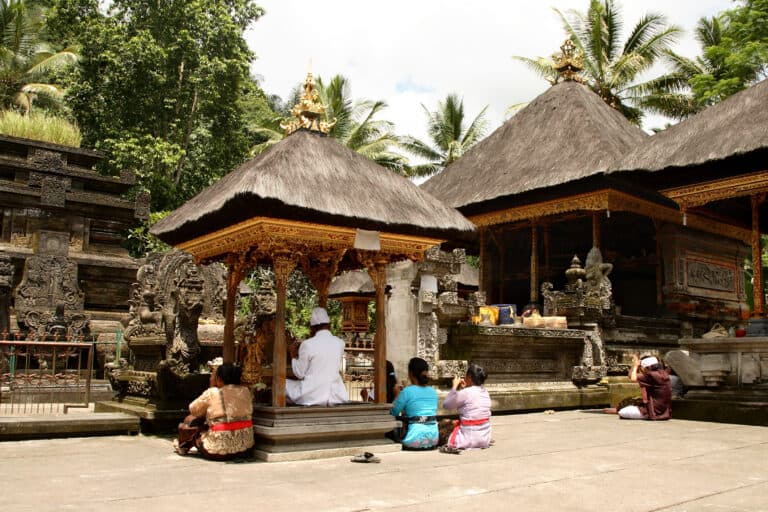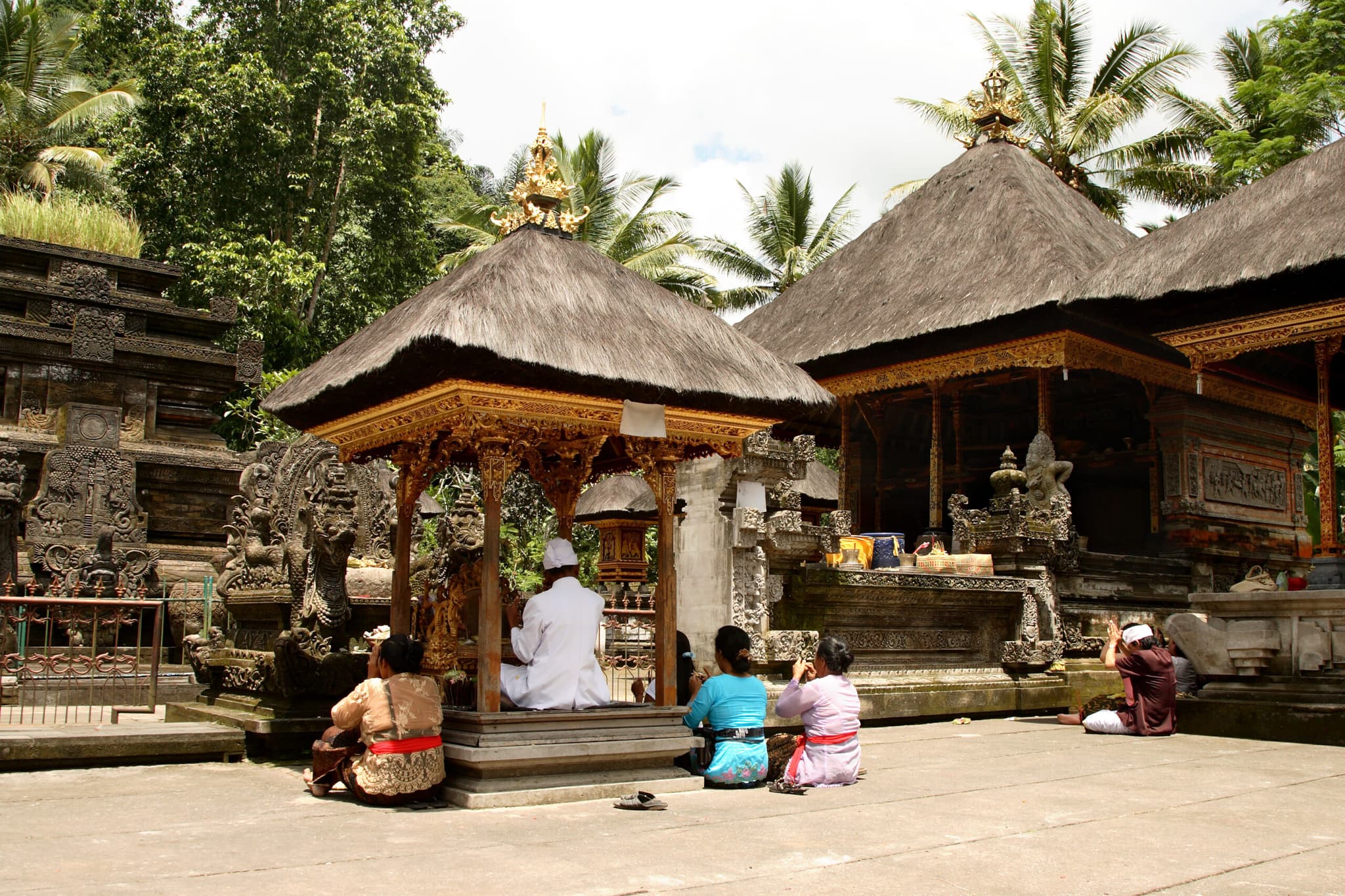
Tenganan Village sits in Karangasem Regency, close to Candidasa. It is one of the last Bali Aga villages, home to one of Bali’s indigenous, pre-Hindu communities. The village is known for its rare geringsing double-ikat weaving and its communal settlement layout, both preserved for generations.

Behind its stone walls and strict customary rules, Tenganan carries a long history of pre-Hindu Balinese tradition, seen in its old houses and unique local rituals. This Bali Aga heritage is still part of everyday life today. Visitors can see local life up close and buy authentic handwoven fabrics. The best time to visit is from morning until midday, and modest dress is required.
Who Are the Bali Aga
According to Sidatapa Village’s official website under the Buleleng Regency government, the Bali Aga are indigenous Balinese people who settled on the island before the Majapahit migration reached Bali in 1343 AD.
Unlike mainland Balinese (also called Bali Majapahit or Bali Jawi), who follow the customary law and social order brought by the Majapahit Kingdom, Bali Aga villages are usually found in mountainous areas. They still hold on to pre-Hindu culture, shaped by the early blending of local tradition with ancient Hindu values.
A Bali Aga village stands out for its egalitarian social structure, one without a caste system (wangsa), and for leadership that is decided collectively rather than inherited.
Each village also has its own local dialect, its own religious traditions, and strict customary rules (awig-awig) to protect its culture, such as communal land ownership and a ban on marriage outside the village to preserve customary rights.
What to See in Tenganan Village
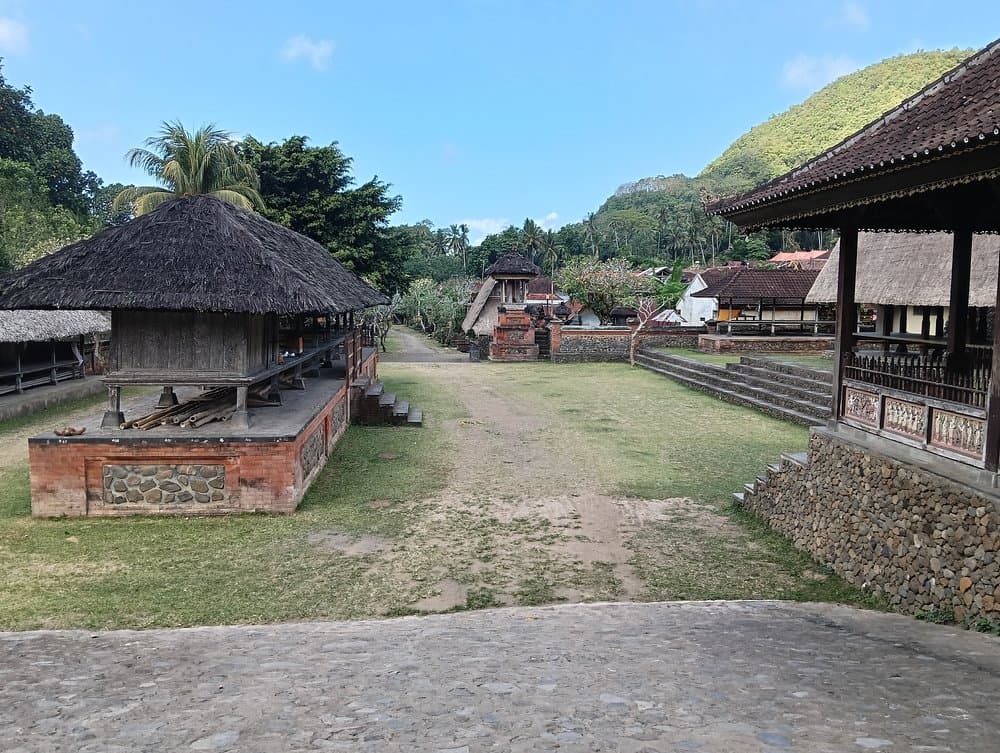
Tenganan Pegringsingan is an old settlement of the Bali Aga people, the indigenous Balinese community that predates Hindu influence. The village has a highly organized layout and social system, where local traditions, customary law (awig-awig), and settlement architecture are strictly maintained today.
Unlike most tourist villages, Tenganan has a wide range of traditional artworks and a layout that is unique not found anywhere else in Bali.
Geringsing Double-Ikat Weaving
Geringsing cloth is a textile found only in Tenganan, made using the double ikat technique. In this method, both the weft and warp threads are tied and dyed with natural pigments before they are woven together.
Making one cloth can take years and uses natural materials from local plants. Locals also believe the cloth carries spiritual value and can protect the wearer from misfortune (gering means sickness, sing means no or not).
Village Architecture and Layout
The layout of Tenganan Village follows the Bali Aga’s linear town-planning style, with rows of buildings running from north (kaja) to south (kelud), all enclosed by natural stone walls.
- Entrance Gate (Candi Bentar): The main entrance is a narrow stone gate that marks both a physical and spiritual boundary, separating the sacred inner village from the outside world.
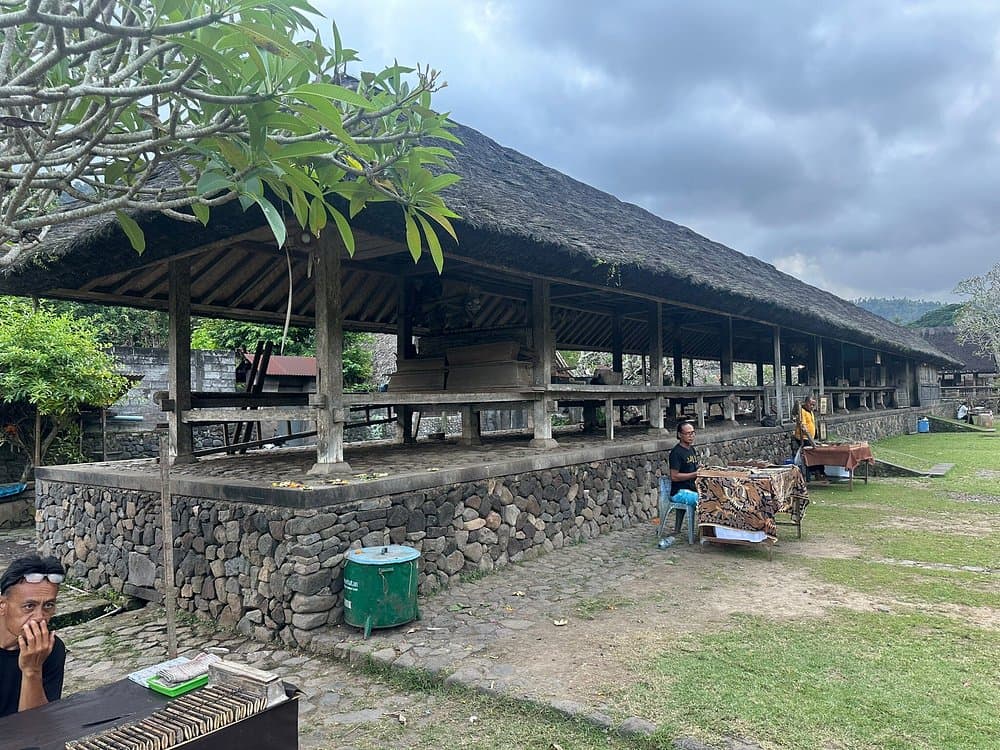
- Bale Agung: A long wooden pavilion at the center of the village. It is used for official village meetings, customary rituals, and discussions among village elders (krama desa).
- Kul-Kul Tower: A wooden tower that holds the kul-kul, a traditional slit drum. It stands in the center of the village and is used to call residents together, mark the start of ceremonies, and announce important news or danger to the whole community.
Tenganan’s Traditions and Ceremonies
As a Bali Aga village, Tenganan Pegringsingan keeps a number of unique traditions and religious rituals rooted in pre-Hindu belief, all dedicated to Lord Indra, the god of war and the village’s guardian deity. The full ceremonial cycle follows the Tenganan customary calendar and has stayed largely unchanged despite modernization.
- Usaba Sambah Ceremony
Usaba Sambah is the most sacred ritual in Tenganan Village, held every year around June or July. It runs for a full month and is meant as an expression of gratitude and a form of spiritual purification for the whole community.
One distinctive part of Usaba Sambah is the traditional swing ritual, where young unmarried women of the village (dahang) ride giant wooden swings pushed by the young men (truna). The swings represent the turning wheel of life and the close bond within the Tenganan community, a tradition still unique to this Bali Aga village.
- Perang Pandan Ritual Combat
Perang Pandan, also known as Mekare-kare, is the high point of the Usaba Sambah ceremony. It is a friendly mock fight between village youths, who strike each other with bundles of thorny pandan leaves (Pandanus amaryllifolius) while holding woven rattan shields for protection.
The fight leaves scratches and small wounds on the skin, but it is done without any anger or ill intent. Wounds from the pandan thorns are treated right away with a traditional remedy made from turmeric and spices to speed up healing. Perang Pandan stands as a symbol of courage, an offering of blood to ward off misfortune, and a way of honoring Lord Indra.
How to Visit Tenganan Village
Tenganan Pegringsingan Village is located in Karangasem Regency, East Bali. It is easy to reach from several major tourist areas: about 10 to 15 minutes (4 to 5 km) from Candidasa, and around 1.5 to 2 hours from Ubud or Denpasar.
There is no fixed entrance fee for this traditional village. Visitors usually give a voluntary contribution at the main entrance to help support the village’s upkeep and facilities. This makes it easy to fit into your planning your East Bali day trip budget, since costs here stay flexible and low.
You can combine your visit to Tenganan Village with other nearby East Bali destinations for a fuller day trip:
- Tirta Gangga: A historic water palace with stone pools, fountains, and koi fish.
- Taman Ujung Soekasada: A former royal retreat that blends Balinese and European architecture, set around large ponds.
- Candidasa Beach or Virgin Beach: White-sand beaches, ideal for relaxing after visiting the traditional village.
A Living Piece of Old Bali

Tenganan offers a rare, still-living glimpse of pre-Hindu Balinese culture. From its stone walls to its geringsing weaving, the village keeps its Bali Aga traditions intact instead of just putting them on display. A visit here shows a way of life that has stayed true to its roots for generations.
Want to see more of East Bali? Check iNi Vie Hospitality’s Souljourn experience for packages that let you explore Bali beyond Tenganan.
FAQs
Tenganan Village is classified as a Bali Aga village because it is home to indigenous pre-Hindu Balinese people who have kept their ancestral traditions since before the Majapahit Kingdom’s influence arrived in 1343 AD. The village follows an egalitarian, casteless social system, strict customary laws (awig-awig), an isolated linear settlement layout, and collective customary leadership.
There is no fixed entrance fee. Visitors simply give a voluntary contribution, such as a donation, at the main entrance to help support the upkeep of village facilities.
Tenganan is about 50 to 55 km from Ubud, roughly 1.5 to 2 hours by car.
Geringsing cloth is a traditional textile unique to Tenganan, made using the double-ikat technique, a highly intricate method considered rare worldwide. It’s dyed with natural plant-based colors, and making one cloth can take years. Locals believe the cloth holds spiritual value and can protect the wearer from misfortune or illness (gering means sickness, sing means no or not).
Yes, the Bali Aga community in Tenganan welcomes tourists. Visitors can talk directly with locals, watch daily activities and the weaving process, and buy handicrafts straight from residents’ homes. The only expectation is to stay polite and respect the village’s customary rules.