
The natural beauty of Bali has become an eco-friendly tourism destination. The ecotourism in Bali continues to grow as more travelers recognize the importance of preserving the natural environment.

Ecotourism allows you to participate directly in preserving nature, leaving a good mark on the environment. To experience it firsthand, here are six eco-friendly tourism destinations in Bali where you can enjoy nature responsibly.
Eco-Friendly Tourism in Bali

Source: Ini Vie Hospitality
Today, many destinations across Bali actively encourage travelers to play a role in nature conservation. These experiences invite you to practice responsible tourism and support the island’s environmental sustainability. Many of these eco-friendly destinations are easily accessible; here are some of the top spots to visit:
Village Tour
A village tour offers an intimate look at how daily life and nature exist in perfect harmony. You will experience the beauty of a community that has carefully preserved its natural heritage, offering a serene atmosphere, helping you truly unwind.
1. Les (Les Tourism Village), Buleleng, Bali
A true hidden gem on the coastline of North Bali, Les Tourism Village is a standout ecotourism destination offering a variety of meaningful activities. It makes your trip fun.
One of its signature experiences is Coral Reef Restoration, where you can actively plant coral and contribute to its underwater growth. Learning directly from the local community provides unique insights that make your trip both fun and educational.
After planting the coral, you can stay at boutique hotels in Bali to rest. It helps you recharge before continuing your journey the next day.
2. Jatiluwih (Jatiluwih Tourism Village), Tabanan, Bali
Jatiluwih Tourism Village, located in the Tabanan Regency, has become one of Bali’s most iconic landscapes. Beyond its breathtaking scenery, the village embodies the deep spiritual philosophy of the Balinese people, showcasing a harmonious balance between nature and humanity.
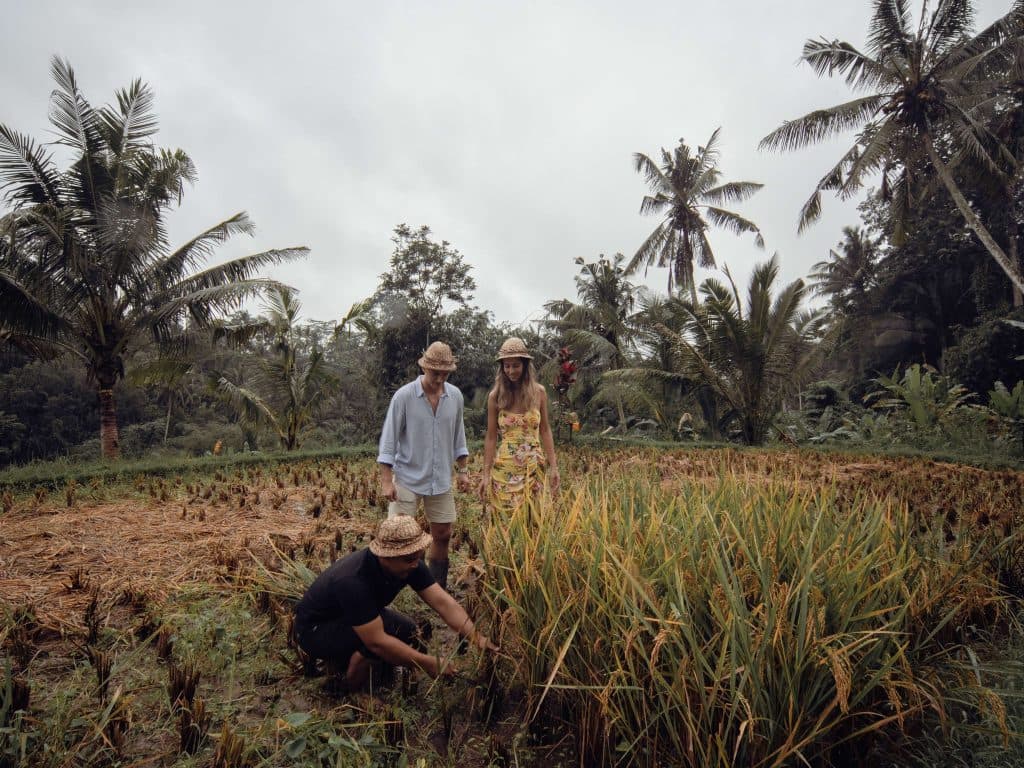
You can do trekking and cycling through the rice fields. It allows you to see how farmers work in rice fields, and you can also join in to work along with them. Tourists will learn how to preserve nature through rice fields for sustainability.
3. Desa Wisata Pelaga
Desa Wisata Pelaga is one of the destinations for eco-friendly tourism. Unlike Bali’s coastal areas, Pelaga offers a refreshing highland landscape.
You can harvest directly from the garden and get a lesson about the local farm and sustainability. These activities help you understand how important it is to preserve nature and sustainability for future generations.
Lifestyle Retreats & Yoga
This shift is especially visible in the rise of lifestyle retreats and yoga experiences across the island. Dewata Island has amazing landscapes that stretch around the island, especially in Ubud.
1. Spa
You can make appointments for a spa in Ubud. Many spas there use natural, locally sourced ingredients, like herbs, oils, and scrubs. The spa utilizes low-waste operations as it does not use any single-use plastics.
For an eco-conscious wellness experience, Svaha Spa is an excellent choice. With several locations across the island, including the stunning Aksari Resort Ubud, they offer signature treatments using locally sourced ingredients designed to melt away stress and release all physical tension.
After getting treatment, you can stay in Aksari Resort as it has become one of the best honeymoon resorts in Ubud. A proper rest experience in Aksari Resort make your trip more seamless.
2. Yoga
Yoga as an ecotourism destination in Bali means practicing yoga in a way that respects nature. This activity also supports local communities, promoting mindful and low-impact travel.
The philosophy behind yoga aligns with sustainability, including Ahimsa (respect for the environment and people), Mindfulness (being aware of the impact as a traveler), and Balance (living in harmony with nature).
Pairing yoga with a stay at a boutique hotel with a wellness package can make the experience even more restorative. It allows you to let your body rest after your session. So, you will not get tired after participating in this eco-friendly activity.
3. Sound Healing
Sound healing is another low-impact experience that aligns naturally with eco-friendly tourism. Using handcrafted instruments and natural vibrations, it focuses on restoring balance without harming the environment.
In Bali, sound healing involves Balinese instruments, like gamelan, and is guided by the local healers or practitioners. Sometimes, it is integrated with spirit rituals or blessings.
4. Melukat
Melukat is a traditional Balinese water purification ritual. allowing you to reconnect with yourself. As the sacred water flows over your body, it’s believed to release emotional and spiritual tension, leaving you feeling lighter and more grounded from this wellness tourism experience
To experience this, Equipoise Resort offers a package for Melukat. You will be led to do it in Manuaba Waterfall. Through this package, the holy streams flow over your head and hands, making the soul feel as light as a morning dew.
Cultural Exploration
Another ecotourism destination in Indonesia is cultural exploration. Through cultural exploration, you will get better insights into how Balinese culture is firmly connected to local people.
For example, you can come to Seascape Uluwatu to learn Balinese offerings, like canang sari. It represents the gratitude and devotion of Balinese Hinduism to the Sang Hyang Widhi Wasa (God).
Or, you can experience ngulat tipat, which becomes part of Bali’s subak system, traditional irrigation and farming philosophy. It symbolizes the gratitude to nature, harmony between humans, nature, and the divine. Through ngulat tipat, Balinese people pray for fertile land and an abundant harvest.
You can also visit Equipoise Resort in Ubud for artisan encounters. You will meet local artisans and craft Balinese local things, like canang sari, bamboo weaving, wood carving, and Balinese fabrics.
Wildlife Sanctuaries
Visiting wildlife sanctuaries is a meaningful form of eco-friendly tourism. Bali offers several conservation sites, such as the Turtle Conservation Center in Serangan, South Denpasar.
Here, you can learn about the turtle life cycle and visit the hatchery to see firsthand how vital these creatures are to our natural world and the health of marine ecosystems.
Additionally, a Mangrove Tour offers a deep dive into how these coastal forests protect Bali’s shorelines. By understanding the life cycle of mangroves, visitors can appreciate their importance in maintaining a healthy environment. These experiences remind us that humans, animals, and nature must live in harmony, inspiring us to join conservation efforts to protect our planet.
Visiting wildlife sanctuaries has become one of the eco-friendly forms of tourism. Bali offers many wildlife sanctuaries, such as Turtle Conservation, located in Serangan, South Denpasar, Bali.
Through this turtle conservation, you will learn about the cycle of turtle life. You can see the turtle hatchery and learn how important turtles are for the natural surroundings. It highlights the important role turtles play in maintaining marine ecosystems.
Additionally, you can join a Mangrove Tour to discover the vital role these coastal forests play in Bali’s ecosystem. This ecotourism experience offers a deep dive into the life cycle of mangroves, helping you appreciate their importance in protecting the shoreline and supporting local marine life
All these wildlife sanctuaries enrich tourists’ insights, helping you learn how humans, animals, and nature live alongside. So, you can join to preserve animals, like turtles, and mangrove trees, to avoid the destruction of nature.
National Park
Visiting a national park, such as West Bali National Park, is a highlight of eco-friendly tourism on the island. Located in the northwest of Bali, this park is celebrated for its diverse ecosystems and serves as a vital sanctuary for the endangered Jalak Bali (Bali Starling).
You will see how the animals live in their natural habitat. Additionally, you can also do snorkeling to see the beauty of the underwater surroundings. These experiences offer a deeper understanding of Bali’s biodiversity while you soak in the natural splendor of West Bali National Park.
Diving within the national park is a premier sport tourism activity, offering a serene experience far from the crowded waters of southern Bali. It provides a unique opportunity to learn about the health of our coral reefs and see firsthand how responsible tourism helps preserve these vital marine ecosystems.
Organic Farm-to-Table
Organic farm-to-table is not merely a trend. It is where the food is made from locally sourced ingredients. There are no harmful chemicals in the ingredients, as they grow naturally in nature.
A coffee plantation visit is a quintessential farm-to-table experience in Bali. You will learn how coffee is grown, harvested, and processed using time-honored techniques. This is a vital part of eco-friendly tourism on the island, as it showcases traditional roasting and brewing methods that have been passed down through generations.
Experiencing organic farm-to-table is not limited to enjoying a coffee plantation. You can participate in agrotourism directly. This activity involves you in farming activities and learning the local agricultural system.
Tourists will plant and harvest rice with local farmers through agrotourism. You can also learn how Subak distributes water from the pura to the surroundings. It connects tourists with nature more deeply than any other type of tourism style.
With all the eco-friendly tourism in Bali, Indonesia, you may choose one or more to learn more about the importance of preserving nature. It helps you avoid behavior that potentially destroys the natural environment, like littering or poaching.
Ini Vie Hospitality: Your Partner in Eco-Conscious Travel
Embracing eco-friendly tourism starts with your choice of stay. Ini Vie Hospitality is a leader in this space, consistently implementing sustainable initiatives that protect and preserve Bali’s natural environment.
Our accommodation preserves the natural environment through our own mantra. We focus on preserving the natural environment as our responsibility for Mother Earth. For a stay that aligns with these values, Ini Vie Hospitality offers accommodations designed with sustainability in mind, allowing you to experience Bali more consciously.