The terms “eco-friendly” and “sustainable” are often used broadly, without clear standards. To ensure accuracy, this article highlights only the sustainability practices officially confirmed by each property.
This guide explains what makes an eco resort in Ubud sustainable and outlines the verified practices at each Ini Vie resort. It also includes a practical tips on how guests can support sustainability efforts during their stay.
What Makes a Resort in Ubud Sustainable?
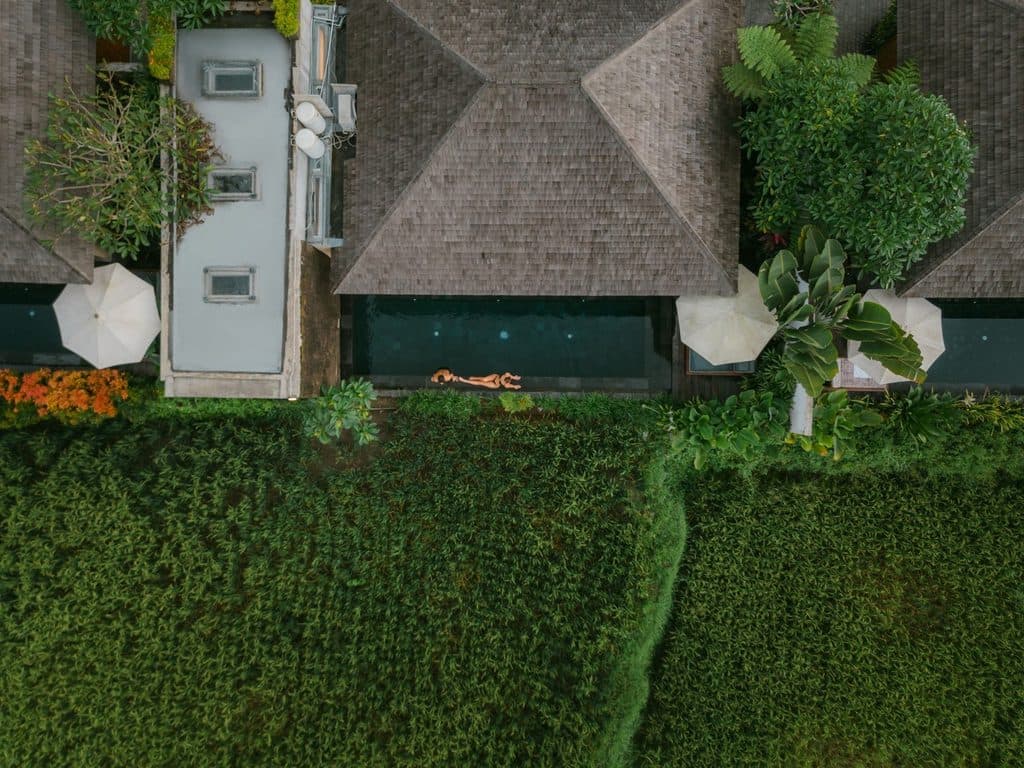
A sustainable resort in Ubud is not simply a property with an “eco” label or surrounded by greenery. Sustainability also depends on how the resort is built, how it manages natural resources, and how it supports the local community.
When choosing an eco resort in Ubud, here are some important sustainability practices to consider.
- Built with Local and Natural Materials
Using bamboo and locally sourced stone can help reduce carbon emissions from transporting construction materials.
- Water Conservation and Respect for the Subak System
Excessive groundwater use by the tourism industry can affect subak, Bali’s traditional irrigation system recognized by UNESCO. Sustainable resorts help protect water resources by reducing unnecessary consumption.
- Reducing Plastic and Managing Waste
Bali introduced restrictions on single-use plastics through Governor Regulation No. 97 of 2018. Beyond reducing plastic use, sustainable resorts also manage waste through proper sorting and recycling.
Some resorts also reuse organic waste by turning food scraps into compost or surplus fruit into products such as preserves.
- Energy Efficiency and Low-Emission Transportation
An eco-friendly hotel in Ubud should also consider how much energy it consumes. This includes managing electronic devices and equipment to reduce unnecessary electricity use.
For transportation within resort grounds, some properties use low-emission vehicles, such as electric scooters or electric golf carts (buggies).
- Empowering the Local Community
Sustainable resorts also support the surrounding community by hiring local residents and working with nearby suppliers.
- Rooted in the Tri Hita Karana Philosophy
Tri Hita Karana is a Balinese philosophy that emphasizes harmony between humans and God, among people, and with nature.
For a sustainable resort in Ubud, this philosophy can be reflected in building layouts, open spaces, environmental practices, and cultural activities offered to guests.
- Having Sustainability Recognition or Certification
Independent sustainability certifications and recognition can help guests assess a resort’s environmental efforts.
Standards developed by the Global Sustainable Tourism Council (GSTC) and recognition from Eco Tourism Bali can provide additional information about a property’s sustainability practices.
Sustainable Resorts in Ubud from iNi ViE Hospitality
1. Kaamala Resort
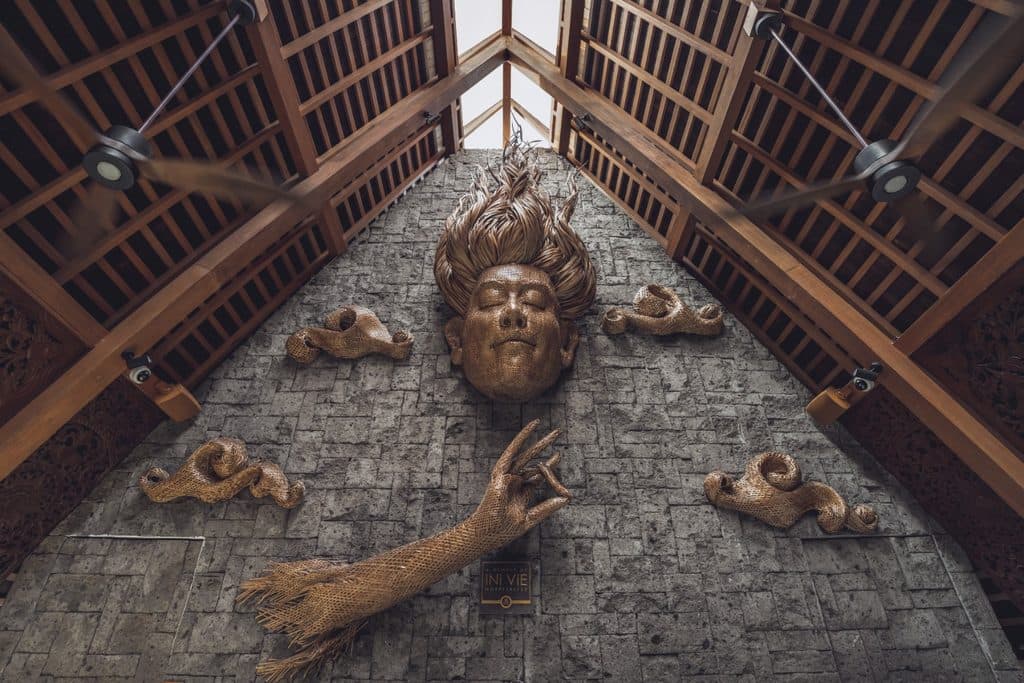
Kaamala Resort Ubud places sustainability at the center of its conscious luxury concept. The resort applies environmentally responsible practices, including tree conservation, recycled materials, solar power, and energy-efficient systems. Its water treatment practices also include TERRA drinking water filtration systems to help reduce the use of single-use plastic bottles.
To support plastic-free initiatives and better waste management, Kaamala works with organizations such as Sungai Watch, Plastic Bank, and Bye Plastic. These partnerships are part of Kaamala’s sustainability commitments to reducing waste and protecting the environment.
Beyond environmental efforts, guests can explore local culture through guided village walks and traditional water purification rituals. For travelers looking for eco luxury villas in Bali, Kaamala combines comfortable accommodation with responsible hospitality and meaningful local experiences
2. Equipoise Resort
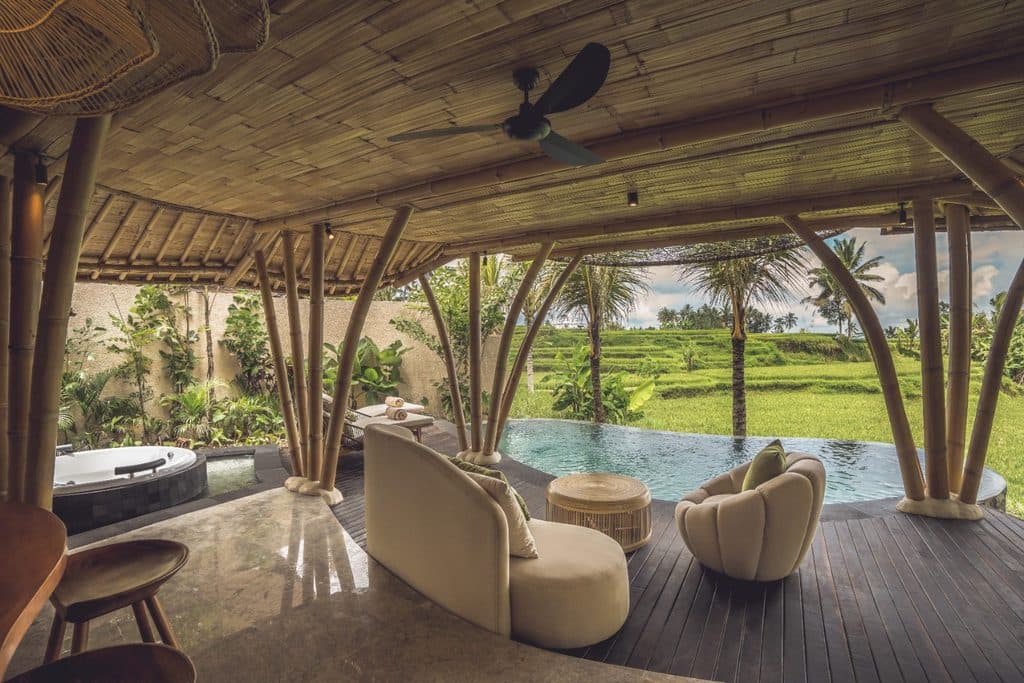
Equipoise Resort Ubud combines bamboo architecture in Bali with sustainable design and local craftsmanship. Built using bamboo, local stone, and recycled materials, the resort follows the Tri Hita Karana philosophy, which emphasizes harmony between people, nature, and the Divine. Its “Reading the Land” approach also ensures that pathways and buildings follow the natural contours of the landscape.
The resort supports local communities through traditional craft workshops, including woodcarving, pottery, batik making, and silversmithing. Its restaurant, Terra Verte, also uses fresh, locally sourced ingredients to prepare modern Italian cuisine.
Located in Kenderan, Tegallalang, Equipoise is an adults-only resort overlooking the surrounding rice terraces. For travelers exploring eco-friendly places to visit in Bali, the resort offers a combination of sustainable architecture, local cultural experiences, and nature-focused hospitality.
2. Maar Resort
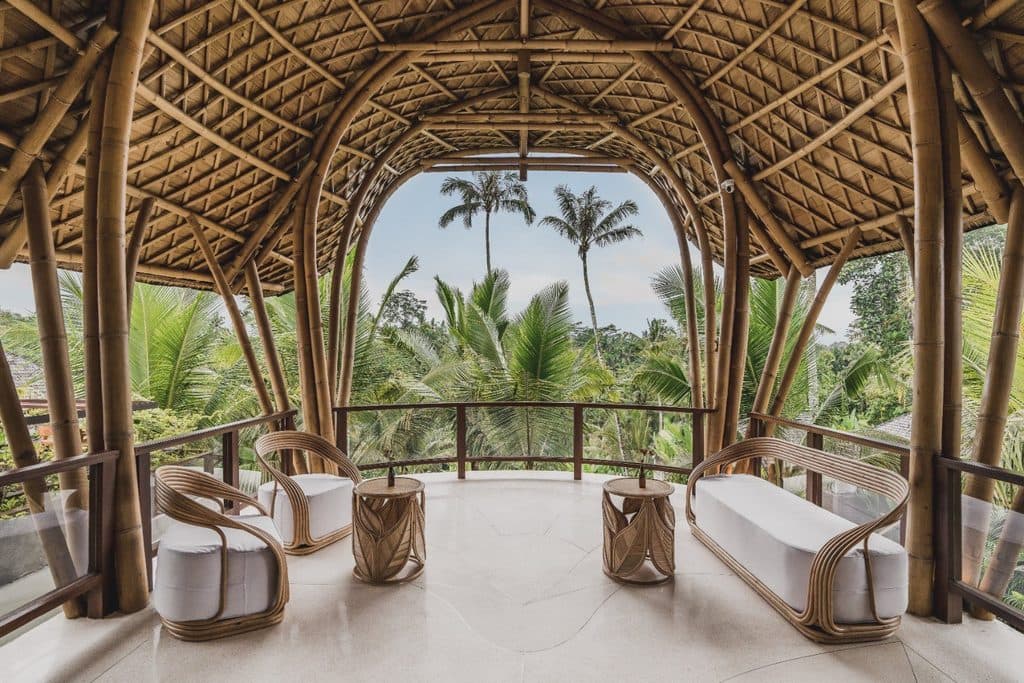
Maar Resort Ubud combines sustainable design with the natural surroundings of Payangan’s rice fields. Built using bamboo, reclaimed wood, and local stone, the resort focuses on low-impact construction, waste reduction, renewable energy, and organic farming. Its on-site restaurant, Cantina Classe Ubud, also uses fresh, locally sourced ingredients.
Located in Melinggih, Payangan, Maar offers villas with private pools or Jacuzzis, along with facilities such as Svaha Spa Maar, a swimming pool, and a fitness center.
As part of Ini Vie’s sustainability approach, Maar also introduces guests to local culture through activities led by Niang Maar, a central figure in the resort’s identity.
4. Aksari Resort
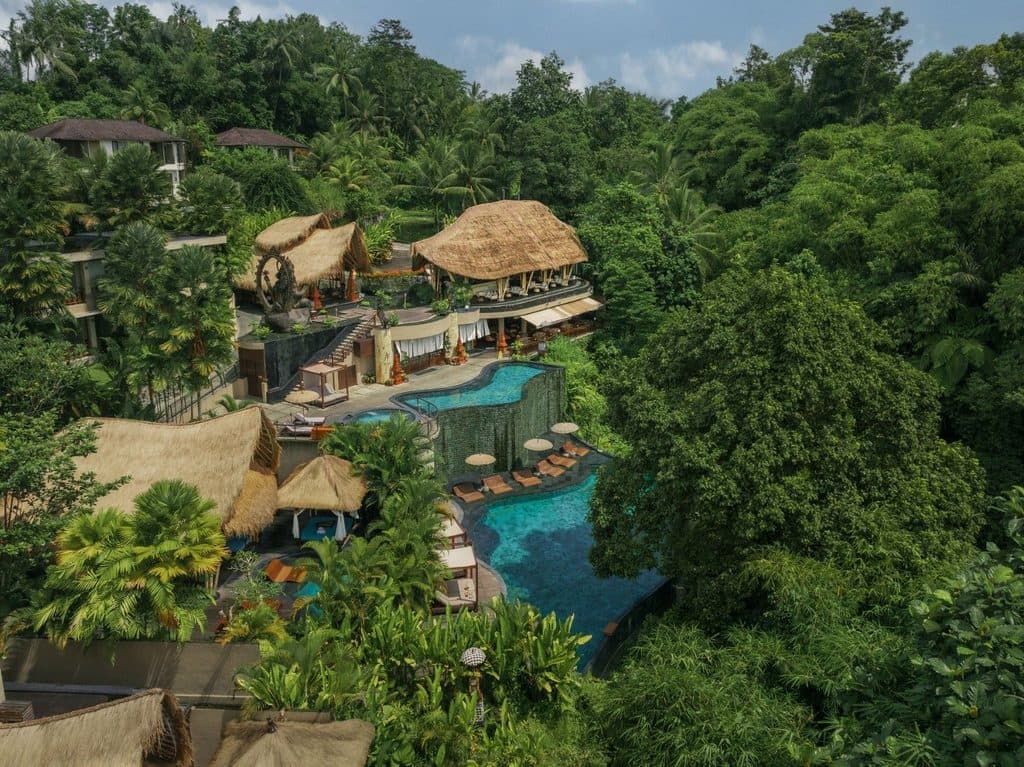
Aksari Resort Ubud integrates sustainability into its operations through six key areas: biodiversity conservation, resource management, eco-friendly design, clean energy, waste management, and carbon reduction. The resort uses recycled materials, solar power systems, and energy-efficient technologies while supporting tree conservation and responsible water management.
To reduce waste, Aksari also works with local communities and waste management initiatives. Its environmental efforts have earned the resort a Gold Eco-Climate Badge from Eco Tourism Bali.
Located in Kenderan, Tegallalang, approximately 25–30 minutes from central Ubud, Aksari offers 30 luxury pool villas and suites. Guests can enjoy traditional Balinese Megibung dining at Ankhusa Ubud, Japanese teppanyaki at Kojin, and wellness experiences at Svaha Spa Kenderan.
The resort also offers yoga and floating sound healing sessions, combining comfortable accommodation with cultural and wellness experiences.
How Guests Can Support Sustainable Stays in Ubud
Staying at a sustainable resort is one way to support responsible tourism, but guests can also make a difference through simple daily habits. Here are seven practical ways to support sustainability during your visit to Ubud.
1. Participate in Local Community Experiences
Choose activities that support local artisans and communities. Equipoise offers workshops in wood carving, pottery, batik, and silversmithing, while Kaamala organizes guided walks around Sebatu Village. Participating in these experiences helps support local livelihoods and preserve traditional skills.
2. Reduce Single-Use Plastics and Food Waste
Bring a reusable water bottle and avoid unnecessary plastic waste. Kaamala, for example, uses the TERRA water filtration system to provide drinking water. Guests can also help reduce food waste by ordering only what they need and avoiding excessive leftovers.
3. Save Water and Electricity
Small habits can help reduce resource consumption during your stay. Turn off the air conditioning and lights when leaving your room, reuse towels when possible, and avoid wasting water. These actions support the resorts’ existing water and energy management efforts.
4. Choose Restaurants That Use Local Ingredients
Dining at restaurants that source ingredients locally can help support nearby farmers and suppliers. Terra Verte at Equipoise, Cantina Classe at Maar, and Ankhusa at Aksari all highlight the use of local ingredients. Guests can also ask restaurant staff about the origin of their food.
5. Choose Low-Carbon Transportation
Reduce transportation emissions by walking to nearby attractions, sharing rides, or using shuttle services when available. Guests can also ask about Ini Vie’s electric vehicle transfers as an alternative transportation option. For example, Manuaba Waterfall is only a short walk from Equipoise Resort Ubud.
6. Respect Local Culture and Traditions
Respecting local customs is another important part of responsible tourism. Follow your guide’s instructions, dress appropriately when visiting temples, and respect local religious ceremonies. These simple actions reflect the Balinese Tri Hita Karana philosophy of maintaining harmony between people, nature, and the Divine.
7. Check Sustainability Claims Before Booking
Before choosing a resort, look for clear sustainability programs and independent recognition. The Global Sustainable Tourism Council (GSTC) identifies four main areas of sustainability: management, socio-economic impacts, cultural impacts, and environmental impacts. Checking these factors can help guests make more informed decisions instead of relying only on eco-friendly labels.
Choosing a Sustainable Resort in Ubud
When choosing an eco resort in Ubud, sustainability should be based on actual practices rather than labels alone. Look for clear efforts in waste management, energy efficiency, water conservation, and community support. Use the comparison table above to find a resort that matches your preferences.
For your next sustainable stay in Ubud, consider booking Kaamala Resort directly through inivie.com to explore its published sustainability commitments, or choose Equipoise Resort for its bamboo architecture and locally inspired design. You can also ask about electric vehicle transfer options when making your reservation.
FAQs
Yes. Many eco-resorts in Ubud still provide air conditioning and private pools. The difference is that they often use energy-efficient AC systems and building designs that support natural ventilation. For example, Aksari offers air-conditioned accommodations, while both Aksari and Maar have villas with private pools.
Look for independent sustainability certifications such as Green Globe or EarthCheck, as well as certifications based on Global Sustainable Tourism Council (GSTC) standards. These standards cover four main areas: sustainable management, socio-economic impact, cultural impact, and environmental impact.
For example, Capella Ubud received EarthCheck Gold certification in December 2024. Before booking, check the certification provider and look for supporting information, such as sustainability reports or measurable environmental initiatives.
Bali has introduced regulations to reduce single-use plastics, including plastic bags, straws, and styrofoam under Governor Regulation No. 97 of 2018. Additional restrictions introduced in 2025 address small plastic beverage containers and hotel waste management.
Many resorts support these efforts by providing filtered drinking water, sorting waste, and working with recycling organizations. For example, Kaamala uses the TERRA water filtration system and collaborates with Sungai Watch, Plastic Bank, and Bye Plastic. Guests can also help by bringing reusable water bottles.
Yes, bamboo can be a sustainable building material when it is responsibly sourced and properly treated. It typically grows within three to five years and can regenerate after harvesting, making it a renewable alternative to many conventional materials.
However, bamboo requires treatment to protect it against insects and fungi. These processes can also use energy and produce emissions. Before choosing a bamboo-built resort, consider asking about the source of its bamboo and the methods used to preserve it.