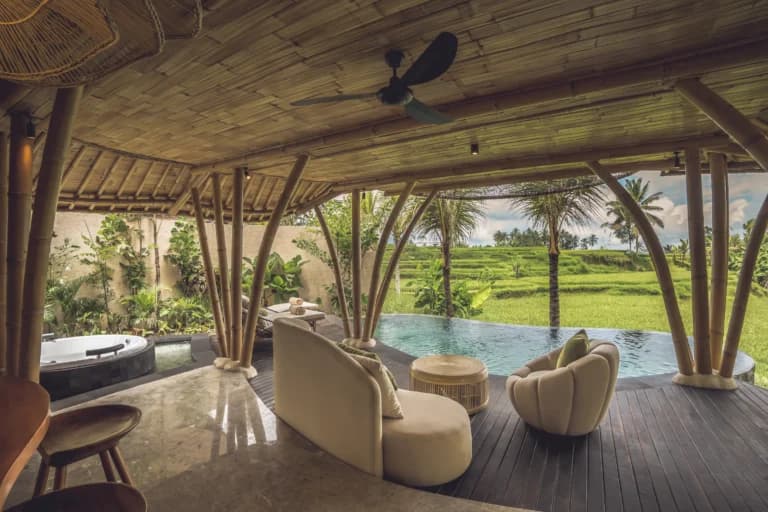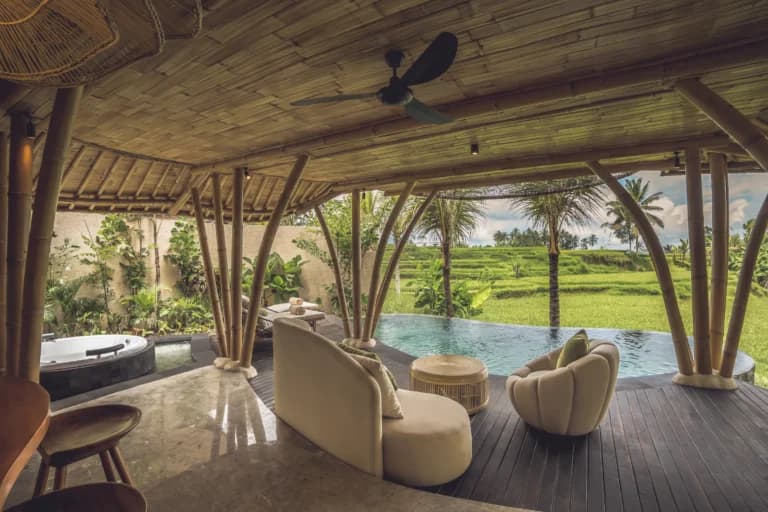
An eco luxury villa in Bali is a high-end place to stay that combines luxury-level amenities and comfort with environmental sustainability. It blends Bali’s natural beauty, eco-friendly design, and private service, without disturbing the surrounding ecosystem.

Beyond sustainability, many eco luxury villas in Bali also follow the local Tri Hita Karana philosophy. This guide explains what eco luxury villas in Bali are and where to find them.
What Makes a Villa Genuinely Eco-Luxury
Amid the growing sustainability trend, “eco” is often used as a marketing label, a practice known as greenwashing. A villa isn’t eco-friendly just because it offers bamboo straws or a few indoor plants. A genuine sustainable villa in Bali combines real comfort with a measurable commitment to the environment.
Here are four things that show whether an eco-luxury villa is the genuinely sustainable:
- Sustainable Building Materials & Construction
Eco-luxury villas are built to keep their carbon footprint low from the start.
- Natural & Local Materials: Built using processed bamboo, reclaimed wood, local stone, or rammed earth, reducing emissions from transporting materials long distances. This is why a bamboo villa in Bali is often the clearest example of the concept.
- Non-Invasive Design: Construction follows the shape of the land, such as stilt structures over rice paddies or cliffs, instead of flattening or damaging the natural landscape.
- Eco-Friendly Finishes: Uses VOC-free paints and non-toxic coatings that are safe for both people and the environment.
- Energy Efficiency & Bioclimatic Architecture
Luxury doesn’t have to mean wasting energy. Well-designed villas use smart layouts and eco-friendly technology.
- Renewable Energy Sources: Powered by electricity from solar panels or micro-hydro systems.
- Natural Ventilation & Lighting: Uses open layouts, high ceilings, and heat-reflecting thatched or bamboo roofs to cut down on air conditioning and lighting use during the day.
- Energy-Efficient Appliances: Uses inverter technology, energy-saving LED lights, and smart air conditioning.
- Smart Water Management & Waste Processing
How a villa handles water and waste says a lot about whether it’s really eco-friendly.
- Water Harvesting & Filtration: Collects rainwater and filters it on-site to cover daily operational needs.
- Wastewater Recycling (Greywater System): Water from showers and sinks is filtered naturally, often through planted gardens, then reused for irrigation.
- Chlorine-Free Swimming Pools: Uses saltwater filtration or plant-based biopools that don’t harm the soil when the water is drained.
- Social Impact & Local Community
Being eco-friendly isn’t only about the environment. It also means supporting the people around the villa.
- Farm-to-Table Dining: Serves organic meals made from produce grown on-site or sourced directly from local farmers.
- Local Workforce Empowerment: Prioritizes hiring workers and artisans from nearby villages, paid at fair rates.
- Zero-Plastic & Composting Program: Separates organic waste for garden compost and avoids single-use plastics entirely.
Best Eco Luxury Villas and Resorts in Ubud
Equipoise Resort Ubud
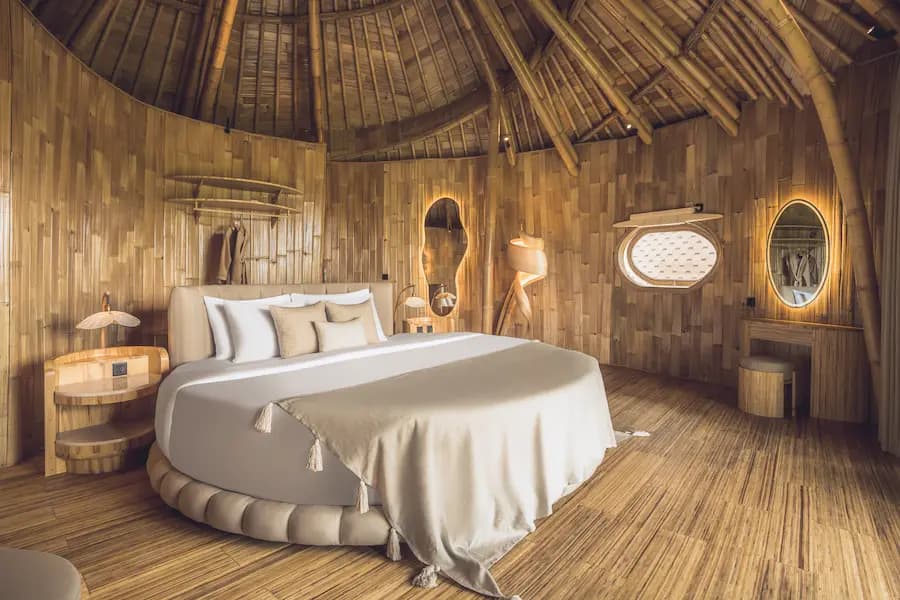
Equipoise Resort Ubud sits on a ridge in Kenderan Village, Tegallalang District, Gianyar Regency, overlooking terraced rice fields. From here, guests get an open view across the valley toward Manuaba Waterfall, a site considered sacred by the local community.
As an eco resort in Ubud, Equipoise builds all of its villas from bamboo and local stone. This construction style follows the Tri Hita Karana philosophy, which is about keeping a balance between people, nature, and the surrounding environment.
Besides bamboo and stone, the buildings also use recycled materials. Building with local materials helps the resort blend naturally into the surrounding rice fields and hills.
Energy efficiency is also part of the design at Equipoise Resort Ubud, in line with the sustainable approach used across the property. This is a core part of the resort’s commitment to eco-friendly construction.
For dining, guests can try dishes made with local ingredients at Terra Verte and Riserva restaurants. The resort also has Hammana Spa on-site, offering relaxation and wellness treatments for guests.
Bambu Indah
Perched on the edge of the Ayung River gorge in Sayan, about 4 km from Ubud town center, Bambu Indah is widely seen as the benchmark for sustainable luxury properties in Bali. It was founded by John and Cynthia Hardy, who built the resort around the idea that architecture should work with its natural surroundings, not against them.
The rooms range from restored antique Javanese joglo houses and bamboo villas to open-air treehouses right on the edge of the gorge, with each one built as a one-of-a-kind structure. If you want to see sustainable design up close, the “Copper House” is a good example. This place suits travelers who care more about design and environmental effort than standard hotel luxury.
Capella Ubud
Capella Ubud is a five-star tented camp in the Keliki Valley, about 20 minutes from Ubud center, designed by Bill Bensley in the style of 19th-century European explorers. It sits on nine hectares of rainforest and rice paddies along the Wos River, and what actually makes it “eco” is that no trees were cut down during construction; the original landscape was left intact.
In December 2024, Capella Ubud earned EarthCheck Gold certification, an international benchmark for environmental management in hospitality.
On the luxury side, the resort has 22 one-bedroom tents and one two-bedroom lodge, each with a private pool, a copper bathtub, and separate indoor and outdoor bathrooms. Its two restaurants, Mads Lange and Api Jiwa, focus on sustainably grown, locally sourced ingredients.
Mana Earthly Paradise
Located in Sayan, Ubud, Mana goes beyond just calling itself eco-friendly, it’s run by Earth Company, an NGO based in Bali and Japan that supports environmental changemakers across the Asia-Pacific region. All profits from the property go straight into funding the NGO’s work.
Every villa here was built using earthbag construction and ethically sourced materials, with reclaimed wood used instead of cutting down trees. About 95% of villa lighting is solar-powered, rainwater is collected and filtered until it’s drinkable, wastewater gets recycled, and food waste is composted.
The restaurant serves fresh, organic food, most of it grown right in Mana’s own permaculture garden. Rooms are built without air conditioning or TVs on purpose. Guests can join climate-related workshops during their stay.
Eco Luxury Villas Elsewhere in Bali
Alila Villas Uluwatu
Perched on the limestone cliffs of the Bukit Peninsula, Alila Villas Uluwatu was designed by the well-known Singaporean architecture firm WOHA. It was the first resort in Indonesia to receive EarthCheck’s highest certification for “Best Practice Building Planning and Design.” The build uses recycled ulin (ironwood) from Kalimantan along with reclaimed railway sleepers, and flat lava-stone roofs absorb Bali’s heat, cutting down on the need for air conditioning.
It was also the first resort in Bali to swap out all plastic amenities for biodegradable alternatives, and it runs its own on-site organic waste processing lab to back up its “Zero Waste” policy. With 65 private-pool villas ranging from 300 to 3,000 square meters, all overlooking the Indian Ocean, this eco-conscious resort shows how five-star luxury and independently certified sustainability can work together.
Grün Uluwatu
Set in the hills of Pecatu with Indian Ocean views, Grün Uluwatu is an eco-boutique treehouse resort built around the site’s existing trees instead of clearing them. With 33 units, this sustainable villa property in Bali runs on solar power and even offers solar-powered electric vehicles for airport transfers.
Its restaurant, The Octagon, follows a “zero-kilometer” approach, sourcing directly from local farmers and fishermen.
Grün Uluwatu was named “Best Eco-Friendly Hotel in Bali” at the Bali’s Best Awards 2025 by Honeycombers before it even officially opened. It has also created more than 150 jobs for the local community, a solid example of eco-tourism done right.
On the wellness side, it leans upscale, with an open-air yoga shala, daily Pilates, and hot and cold plunge pools. The La Cima sky lounge adds 180-degree views.
Alila Manggis
Located in Buitan Village, Manggis, in Karangasem Regency. Alila Manggis earned EarthCheck Gold certification in 2016, and it moved up to EarthCheck Platinum in 2023, a rare level in Karangasem. That makes it one of the few properties in Karangasem with third-party sustainability verification that keeps improving instead of just holding steady. It makes a worthwhile stop on an east Bali day trip.
Its sustainability efforts are concrete and trackable, including a zero-waste policy, along with on-site sorting and composting of organic material. The coral reef conservation program with local diving operator Zen Dive Bali includes weekly visits to maintain the underwater garden and track its growth.
For the local community, it runs the “Greenbank” program with Buitan Village residents, training and hiring locals to handle dry waste recycling, a good model of sustainable living in practice. At Seasalt restaurant, at least 80% of ingredients are locally sourced, and at least 10% of profits go back into community and sustainability programs.
What to Ask Before Booking an “Eco” Villa
- What sustainability certifications does this property hold, and who issued them?
“Eco-friendly” claims in brochures or on Instagram are often unverified. Ask for specifics: do they hold certifications like EarthCheck, Green Globe, B Corp, LEED, or the official Indonesian “Green Hotel” certification? These come from independent auditing bodies that regularly check energy, water, and waste data, unlike properties that only look green because of photos with bamboo and plants.
- Where do water and waste go after use?
This is one of the least asked but most important questions. Genuinely low-impact properties usually treat or recycle greywater, compost kitchen waste, and avoid relying on plastic bottled water for every guest. If the answer is vague or staff don’t know, that’s a red flag.
- What is the source of electricity, and what percentage is truly renewable?
Many resorts mention “solar panels” but only use them for garden lighting, while air conditioning and kitchens still run on the main grid (PLN) or diesel generators. Ask for a real percentage, not just a general “yes, we use solar power.”
- Where do the building materials come from, and were any trees cut down to build this property?
Any eco luxury villa in Bali that is genuinely committed to sustainability should be able to explain where its materials come from in detail: local bamboo, reclaimed wood, or locally sourced stone, and whether the original landscape was kept intact or cleared for construction.
- What percentage of the staff comes from the local community, and does the property support local community programs?
Real eco luxury isn’t only about the environment; it’s also about social impact. Do they hire local villagers, support local small businesses, or run community training programs that can actually be verified, rather than just mentioning them in passing on their website?
- Can I see the annual sustainability report or concrete data?
Serious properties usually have sustainability reports with real numbers, such as the percentage of waste diverted from landfills or water saved. If all they offer are phrases like “we care about the environment” with no supporting data, that’s a classic sign of greenwashing.
- Do guest reviews on Google, TripAdvisor, or Booking.com specifically mention sustainability practices, or are they just general comments about the view and service?
Genuine reviews from past guests are often more honest than marketing materials. Look for reviews with concrete details, such as “the water is actually recycled” or “staff explained the composting process,” as an extra way to check.
Luxury That Doesn’t Cost the Earth
Choosing an eco luxury villa in Bali isn’t about picking the prettiest photos on Instagram. It comes down to real, checkable things: where the materials came from, how water and waste are handled, how much energy actually comes from renewable sources, and whether local communities genuinely benefit. A villa that can answer those questions with real numbers, not just nice words, is the one worth booking.
If you’re looking for a place that checks all these boxes without giving up comfort, Equipoise Resort Ubud is worth a closer look. Built with bamboo and local stone, set against a backdrop of sacred rice terraces, and grounded in the Tri Hita Karana philosophy, it shows that true sustainability and five-star comfort can exist in the same place.