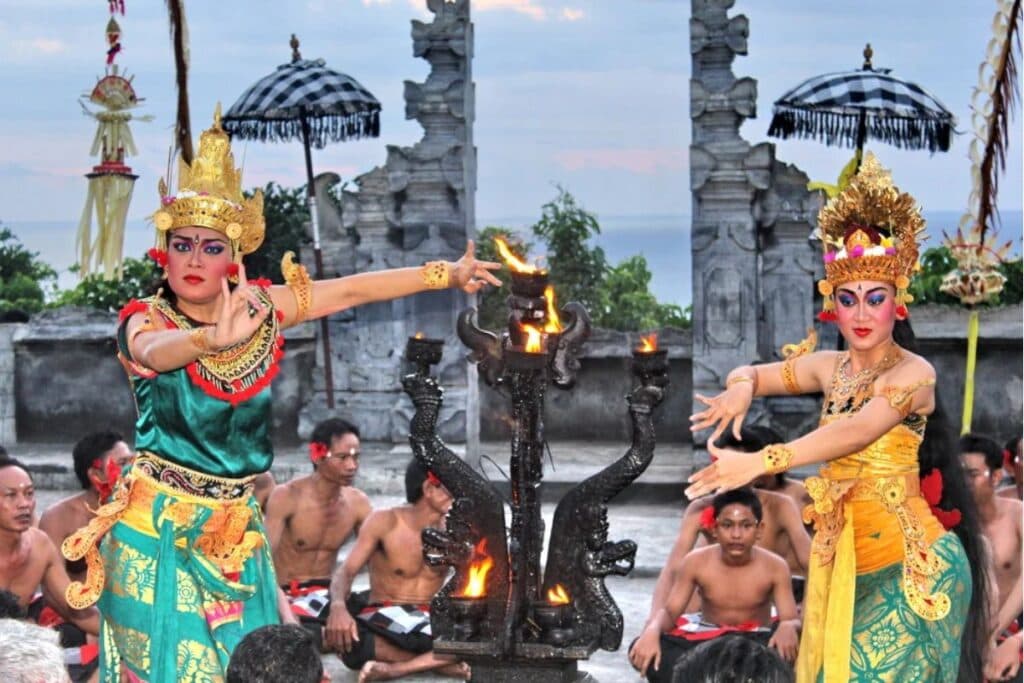
Traditional Balinese dance is an art form rooted in Balinese Hindu culture and usually performed with gamelan music. In 2015, UNESCO recognised it in three groups: sacred (Wali), semi-sacred (Bebali), and entertainment (Balih-balihan). Popular performances like Legong, Barong, Kecak, Pendet, and Baris are easy to find around the island, with nightly shows at Ubud Royal Palace from 7:30 PM and the famous Kecak at Uluwatu Temple at sunset, around 6 PM.
If you want to learn more about Balinese dance, this article covers the three genres, the main dances, and where to watch them on the island.
The Three Genres of Balinese Dance Recognised by UNESCO
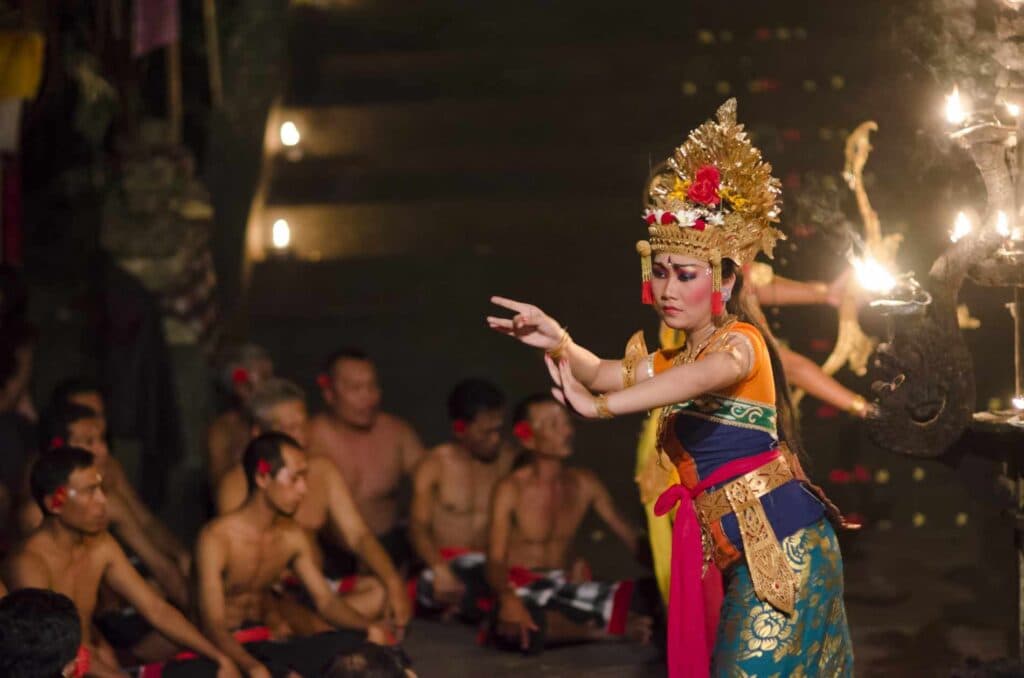
In December 2015, the Three Genres of Traditional Dance in Bali were officially inscribed on the UNESCO Intangible Cultural Heritage List, joining the organisation’s Representative List alongside other living traditions from around the world. The recognition groups Balinese dance into three main genres, Wali (sacred), Bebali (semi-sacred), and Balih-balihan (entertainment), each with its own set of dances. It also highlights the deep spiritual, artistic, and social roles these traditions play in Balinese life.
But why is Balinese dance divided into three genres? Each one is defined by its function, its level of sacredness, and where it is performed within the community and Hindu tradition. Here is a closer look at each of them:
- Wali (Sacred): Performed only for religious ceremonies and sacred rituals in the jeroan, the innermost courtyard of the temple, as an offering to the gods and ancestors. These dances are considered holy, so they cannot be staged for entertainment or commercial purposes, and some, like Sanghyang Dedari, involve the dancers entering a trance.
- Bebali (Semi-Sacred): Performed to accompany religious ceremonies in the jaba tengah, the temple’s middle courtyard, and often used to tell epic stories to the Balinese community. It sits between sacred and entertainment, usually combining storytelling, acting, and dance-drama.
- Balih-balihan (Entertainment): Performed for entertainment, to welcome guests, or as an art show for visitors. Its movements are more dynamic, the choreography is freer, and it is secular, meaning it is not tied to sacred rituals.
Types of Traditional Balinese Dance
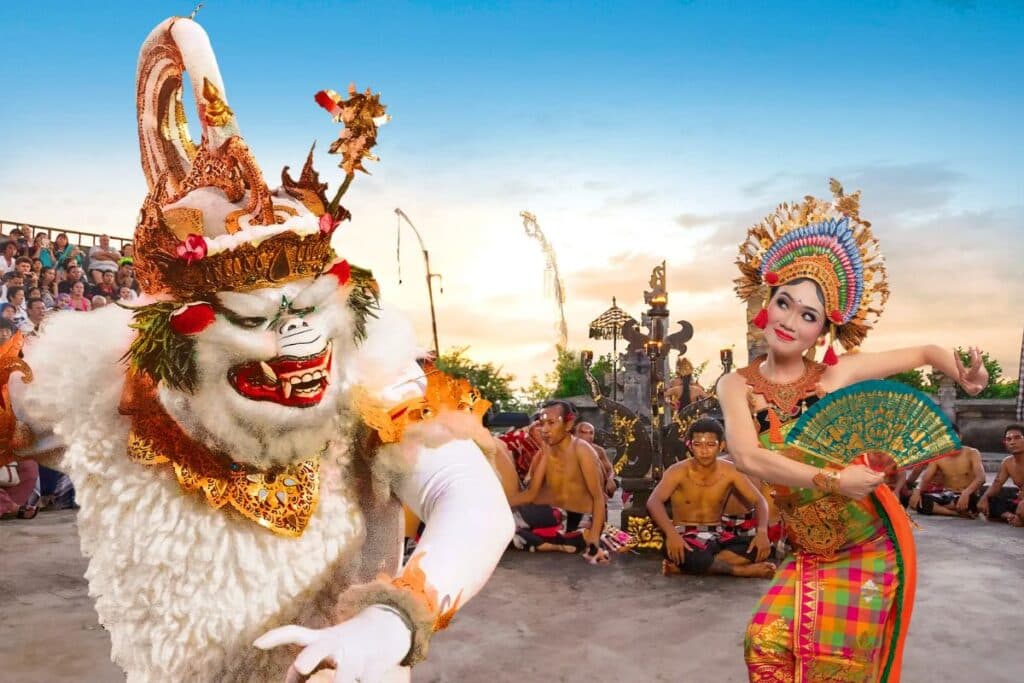
Each Balinese dance genre has its own dances, which differ in movement, storyline, and ritual role. Here are the main types of traditional Balinese dance in each genre:
Wali (Sacred)
- Baris Upacara Dance: The name comes from “bebarisan,” meaning a line or formation, which refers to the rows of soldiers who once served Bali’s kings. Performed by a group of men, it features strong, masculine movements that symbolise a warrior’s courage, strength, and heroism.
- Rejang Dance: Danced by a group of Balinese women with simple, graceful movements. Many villages have their own version, such as Tenganan village, where young girls perform it in traditional gringsing cloth. This sacred piece is an offering to welcome Ida Sang Hyang Widhi Wasa and the gods, who are believed to come down to earth during temple ceremonies.
- Sanghyang Dedari Dance: A sacred trance ritual held to protect the Balinese community from disease outbreaks, natural disasters, and other negative forces. The dancers are young girls who have not yet reached puberty, and they are believed to be possessed by heavenly nymphs (dedari) during the ritual. The number of dancers varies by village, from a single girl to a small group.
Bebali (Semi-Sacred)
- Topeng Sidakarya Dance: A masked dance performed solo by a male dancer to ensure every ceremony or ritual on the island is completed smoothly. The name comes from “sida,” meaning accomplished, and “karya,” meaning work or ceremony, together symbolising a ceremony that has been carried out perfectly. Its origin traces back to the legend of Brahmana Keling, a priest from East Java. He came to Besakih Temple during the reign of King Dalem Waturenggong of the Gelgel Kingdom and later received the title Dalem Sidakarya.
- Wayang Wong Dance: A dance-drama that brings the Ramayana epic to life, with performers portraying characters from Balinese shadow puppetry. Its movements follow strict stylised rules that range from graceful to masculine, accompanied by gamelan and tembang (traditional sung verses). Each performance carries moral lessons about good and evil, giving the audience values to reflect on.
- Gambuh Dance: The oldest classical dance-drama on the island, often regarded as the root of classical Balinese dance. It is accompanied by the gamelan pegambuhan, known for its long bamboo flutes, and tells heroic and romantic tales of Prince Panji from East Java.
Balih-balihan (Entertainment)
- Kecak Dance: Performed by a large group of men seated cross-legged in circles, chanting a rhythmic “cak, cak, cak” in place of any musical instrument. The performance retells the Ramayana epic and blends movement, drama, and vocal chant into one show. Although it feels ancient, Kecak was developed in the 1930s from the chants of the sacred Sanghyang trance ritual.
- Pendet Dance: Originally a sacred offering performed in temples to welcome the gods descending to earth, Pendet is now also used to greet guests while keeping its religious meaning. It is danced by groups or pairs of women in traditional Balinese attire, often carrying bowls of flower petals, with supple movements of the fingers, body, and neck, along with the sharp, expressive Balinese dance eyes known as seledet.
- Janger Dance: Inspired by coffee farmers who sang in call-and-response to ease their fatigue after work, this social performance later absorbed elements of Sanghyang ritual chants. It is performed by young men and women, usually around 10 pairs. The women, known as janger, wear a traditional gelungan headdress, kain, and badong, and carry a fan, while the men, known as kecak, sit in a circle or in rows chanting “cak, cak.”
- Legong Dance: A classical dance with a rich vocabulary of intricate movements, closely bound to the structure of its gamelan accompaniment. The name comes from the Balinese words “leg,” meaning flexible or graceful movement, and “gong,” meaning gamelan. Performed by two or three girls, it demands supple fingers, distinctive body posture, and sharp eye movements in time with the music. Its stories come from classical tales, most famously the King of Lasem story in Legong Kraton, while other variations draw on episodes from the Ramayana.
- Joged Bumbung Dance: A lively social dance for young people, accompanied by a gamelan made mostly of bamboo. The female dancer often invites men from the audience to join her, and each variation has its own movements and musical style.
- Barong Ket Dance: Features the Barong, a lion-like mythical creature brought to life by two male dancers, one controlling the head and front legs and the other the back legs and tail. It portrays the eternal battle between good, represented by Barong, and evil, represented by Rangda, which usually ends in balance rather than the defeat of either side.
Where to Watch Balinese Dance in Bali
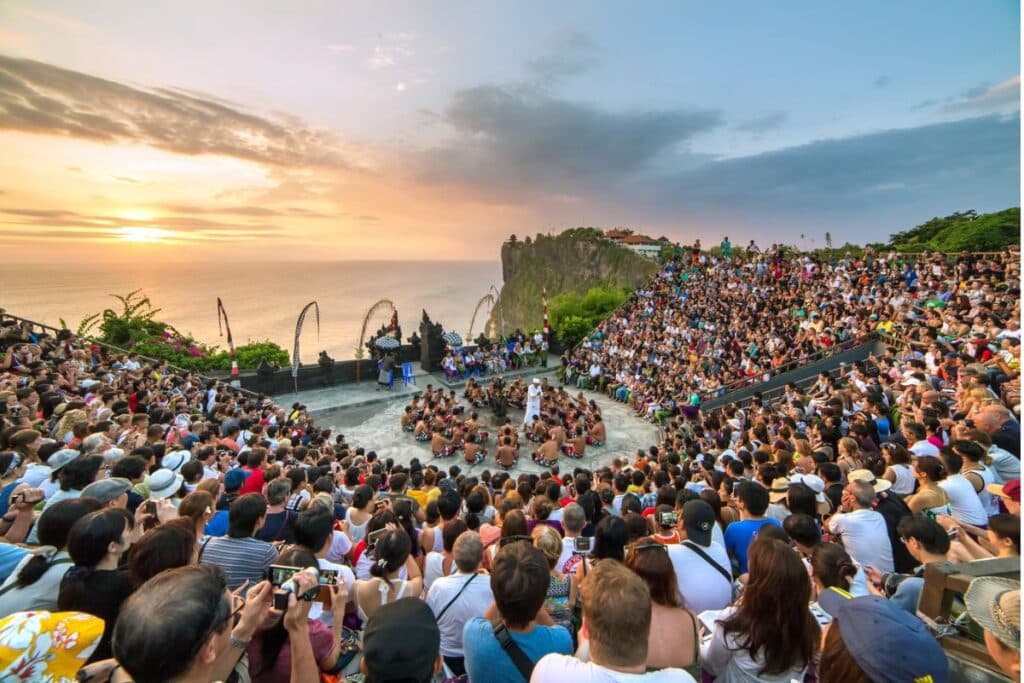
To enjoy a traditional Balinese dance performance, you can head to one of these spots:
Uluwatu Temple
One of the most popular places to watch Kecak, with the ocean and sunset as a backdrop from the top of the cliff. The show takes place in an open-air amphitheatre within the Uluwatu Temple complex, which can seat more than 1,000 guests. Performances run daily at 6 PM, with a second show at 7 PM, and tickets cost IDR 150,000 for adults and IDR 75,000 for children. Note that the temple entrance fee is charged separately.
Garuda Wisnu Kencana (GWK) Cultural Park
GWK is another great place to enjoy Bali dance shows, especially Kecak. Here, the performance takes place at the Lotus Pond, an open-air venue within the same park as the giant Garuda Wisnu Kencana statue. The show runs daily at 6 PM and is included in the regular park ticket of IDR 150,000, while children under 100 cm enter for free.
Ubud Royal Palace
Watching a Legong performance at Ubud Royal Palace is one of the best things to do in Ubud. The show takes place in the palace courtyard almost every night at 7:30 PM, with tickets around IDR 100,000 per person. The program rotates through the week, so you may also catch Barong or other dances on certain nights.
Seraya Budaya Batubulan
To watch Barong or Kecak, head to Seraya Budaya, near the arts village of Batubulan in Gianyar Regency and about 10 km from Denpasar. The Barong show runs daily at 9:30 AM, while Kecak is performed in the evening around 6 PM, with tickets around IDR 150,000 per adult.
At a Balinese Wedding
Some Balinese weddings feature welcome dances such as Pendet or Sekar Jagat, usually performed to greet guests or during the procession for the bride and groom. Creation dances like Cendrawasih are often added to liven up the celebration. These take place at private events, so they are not bookable shows. If you’re invited, check what to wear to a Bali wedding as a guest before you go.
Seeing Traditional Balinese Dance on Your Trip
Balinese culture is rich, and traditional Balinese dance is one of its most stunning expressions, with three genres: Wali (sacred), Bebali (semi-sacred), and Balih-balihan (entertainment). The right show depends on your trip. Choose Kecak at Uluwatu Temple for a dramatic sunset, or Legong at Ubud Royal Palace for an easy evening in town. If you watch at a temple or another sacred place, learn the basic etiquette beforehand so you don’t do anything inappropriate.
iNi ViE Hospitality has resorts and villas close to popular dance venues, making them a convenient base for a smooth viewing experience. Stay at Kaamala Resort Ubud on Jl. Bisma and enjoy dinner at Habitat Bistro before heading to Ubud Royal Palace for the 7:30 PM performance. If the sunset Kecak is on your list, Seascape Resort Uluwatu puts you about 10 minutes from the temple, so you can catch the show without a long drive back. Book your stay at either property and plan your dance nights around the shows.
FAQs
Kecak is the most famous traditional Balinese dance worldwide, known for its chanting group of men and its sunset show at Uluwatu Temple. Legong and Barong are also among the most famous.
Ubud Royal Palace is the most popular place to watch traditional Balinese dance in Ubud, with performances almost every night. You can also find Kecak and fire dance shows at Pura Dalem Ubud and Peliatan Palace.
Most performances last around 45 to 90 minutes. The Kecak shows at Uluwatu Temple and the Barong show in Batubulan run for about an hour, while evening performances at Ubud Palace usually take around 75 to 90 minutes. Try to arrive at least 30 minutes early to get a good seat.
Yes, most Balinese dances are rooted in Balinese Hindu culture, but not all of them are performed for religious purposes. Sacred (Wali) and semi-sacred (Bebali) dances are part of temple ceremonies and rituals, while entertainment (Balih-balihan) dances like Legong, Kecak, and Barong are staged for audiences and visitors. Even so, these shows still carry spiritual meaning, so it’s best to watch them with respect.
Balinese dance has three genres, recognised by UNESCO in 2015: Wali (sacred), Bebali (semi-sacred), and Balih-balihan (entertainment). Each is defined by its function and where it is performed.