In Bali, the word “eco” appears on so many accommodation listings that it has lost much of its meaning. Travelers need a clear way to tell real sustainable practices from marketing labels. Bali has banned single-use plastics under Governor’s Regulation No. 97 of 2018, but meeting that rule alone does not make a property a true eco stay in Bali.

This article gives you a five-point checklist for evaluating accommodations, including credible certifications to look for and red flags to avoid. You will also find the areas in Bali with the most sustainable lodgings, so you can book with more confidence.
What Counts as an Eco Stay in Bali?
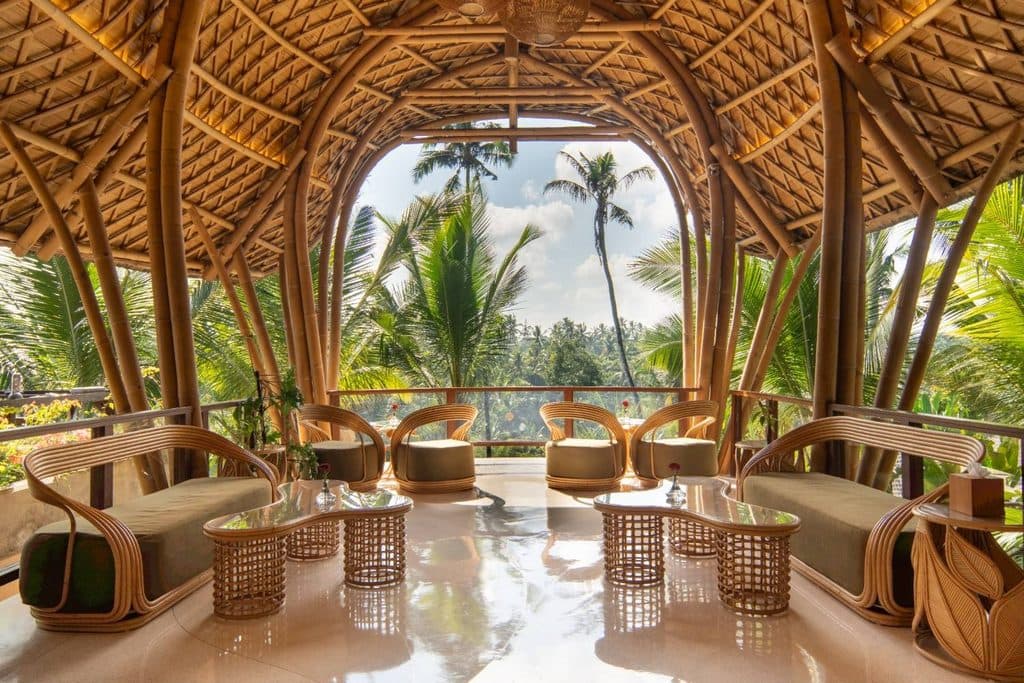
An eco-friendly place to stay takes more than an “eco” label or a few bamboo straws. The Global Sustainable Tourism Council (GSTC) Hotel Standard is a globally recognized benchmark for sustainable tourism. It sets out four areas a property should manage: business operations, benefits to the local community, respect for local culture, and environmental impact.
In practice, you can spot this through visible details. These include saving electricity and water, sorting waste, cutting single-use plastics, planting native species in the garden, and hiring local staff and suppliers. A genuine sustainable hotel in Bali often reflects the same eco-friendly habits many travelers already follow at home.
The good news is that green claims can be verified. The standards require properties to back up their claims with data or documents, track energy and water use per guest night, and avoid overstating efforts that have not been put in place.
GSTC does not issue certificates itself, but its standards are the basis for programs such as EarthCheck, Travelife, Biosphere, and Green Globe. When choosing an eco stay in Bali, ask which certifications the property holds and check that they are still valid.
5 Signs a Bali Hotel or Villa Is Genuinely Eco-Friendly
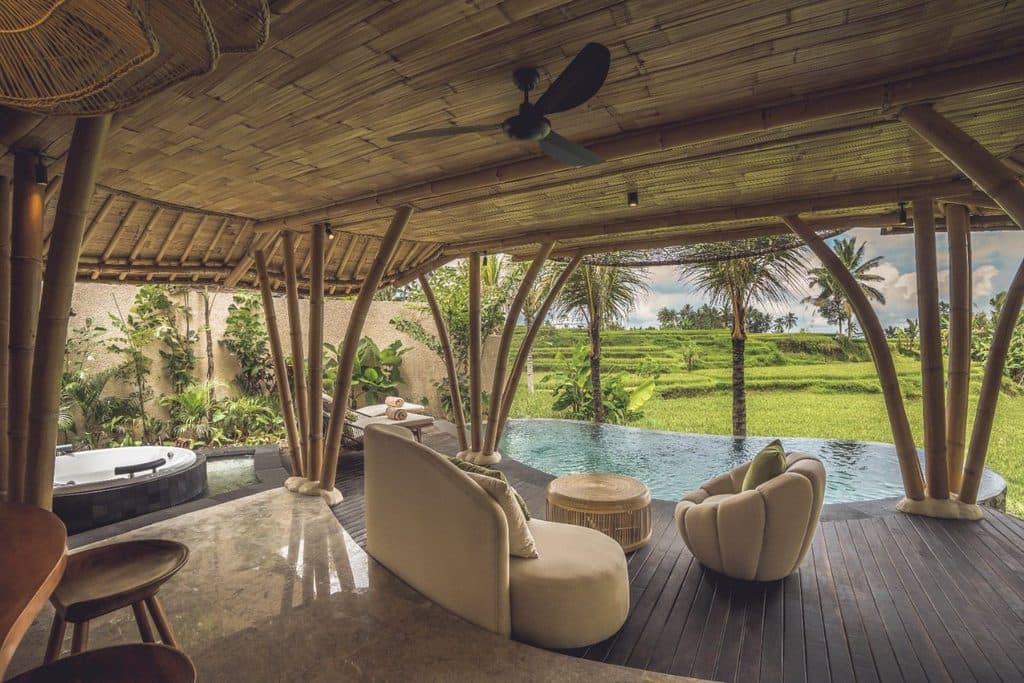
1. Built With Local, Low-Impact Materials (bamboo, reclaimed wood, local stone)
An eco-friendly accommodation in Bali should be built with bamboo, reclaimed wood, or local stone worked by nearby artisans, not imported materials added only for a “tropical” look. Ask: “Where do the building materials, including timber, come from, and who built the structure?”
2. Water and Energy (solar power, water refill stations, greywater reuse)
Look for visible conservation features such as solar panels, drinking water refill stations in common areas, and systems that treat shower water for garden irrigation. A sustainable hotel in Bali should be able to answer questions about this openly. Ask: “What share of your electricity comes from renewable energy, and where does the wastewater go?”
3. Waste and Plastic (no single-use plastic, composting)
Good signs include no plastic water bottles, refillable soap and shampoo dispensers, and sorted waste bins. Composting food scraps is also part of zero-waste efforts in Bali hospitality. A green hotel certification can confirm that these practices are checked by an outside party. Ask: “What happens to food scraps and plastic waste after they leave the property?”
4. Food Sourcing (own garden, farm to table, local suppliers)
Menus that are truly local usually name where the ingredients come from, whether it is the property’s own garden, nearby village farmers, or local fishermen. A genuine farm-to-table restaurant can point to specific suppliers instead of using the phrase as a label.
Plant-based options are also common. Ask: “Which ingredients on today’s menu come from your own garden or nearby suppliers?”
5. People and Culture (local staff, craft workshops, Tri Hita Karana)
Notice whether most of the staff come from the local community and whether the property offers workshops with local artisans. Also check if Tri Hita Karana, the principle of harmony with people, nature, and the Divine, is part of daily operations. Ask: “How many staff members come from the surrounding village, and which communities or artisans do you work with?”
Where Eco-Friendly Accommodations Cluster in Bali
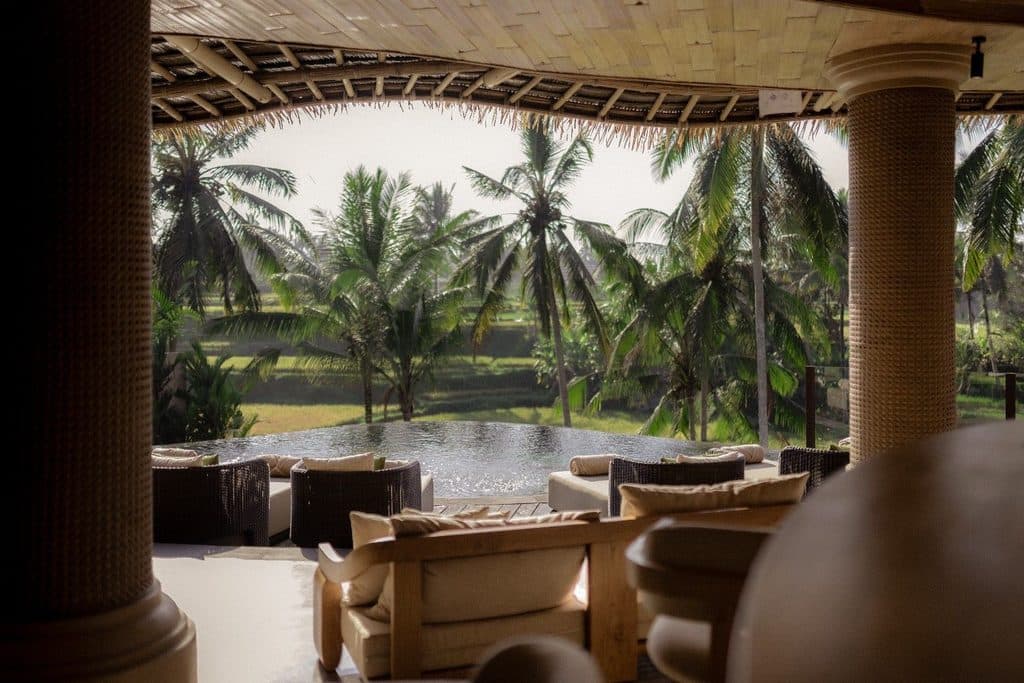
1. Ubud and Central Bali
Ubud is surrounded by rice paddies and river valleys, so many stays here are built around harmony with nature. You will find an eco resort in Bali, solar-powered villas, and wellness retreats that grow some of their own produce. If you want a bamboo villa in Bali, this area is a good place to start.
2. Sidemen and East Bali
Sidemen is a quiet village with rice paddies and views of Mount Agung, far from the tourist crowds. Stays here are usually small and run by locals who are well connected to the surrounding community. Many of them are bamboo houses in Bali, which suit the village setting.
3. Munduk and the Mount Batukaru
The Munduk highlands and the slopes of Mount Batukaru bring cool air, waterfalls, forests, and coffee plantations. This area has pioneering places and an eco lodge in Bali that teaches permaculture and organic farming. Munduk Moding is a plantation resort with its own coffee grove.
4. Pemuteran and West Bali
Pemuteran is close to Menjangan Island, so many stays here work together with diving centers and coral reef conservation projects. Options range from simple dive lodges like Kubuku to luxury beachfront resorts.
5. Nusa Penida and Nusa Ceningan
These islands east of Bali are quieter than the mainland, and some stays are small bamboo properties, such as the 10-unit Penida Bamboo Green Villas. Fresh water and waste management are harder on small islands, so questions about water sources and waste disposal matter most here.
A good location does not automatically make a stay eco-friendly. Use the five indicators above to evaluate each property, whichever of these eco-friendly destinations in Bali you choose.
Eco-Minded Stays in Ubud From Ini Vie Hospitality
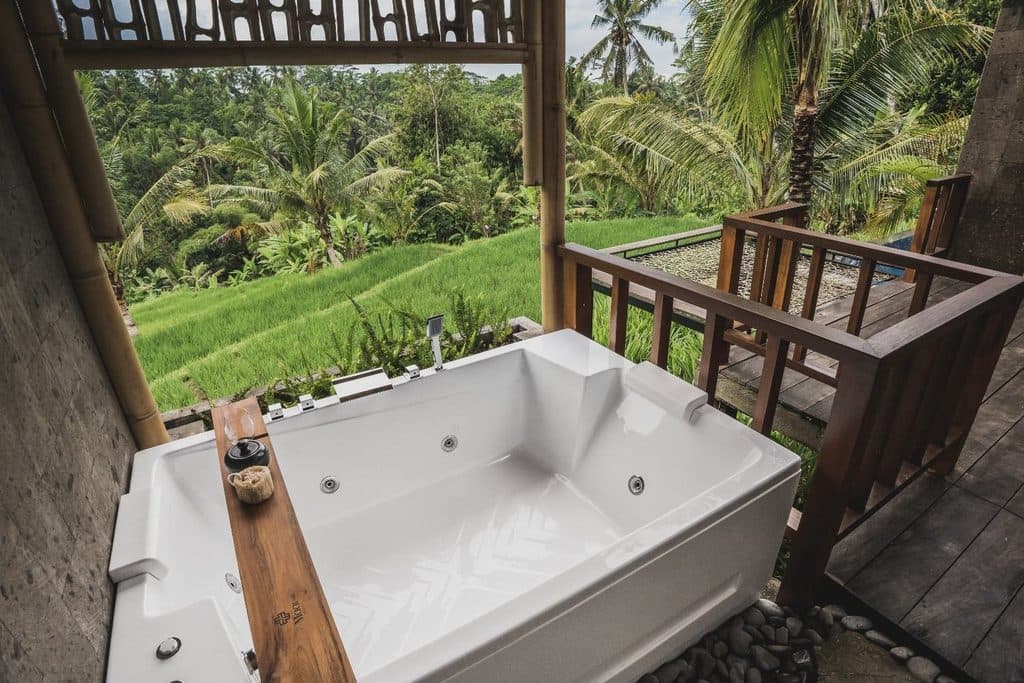
1. Maar Resort
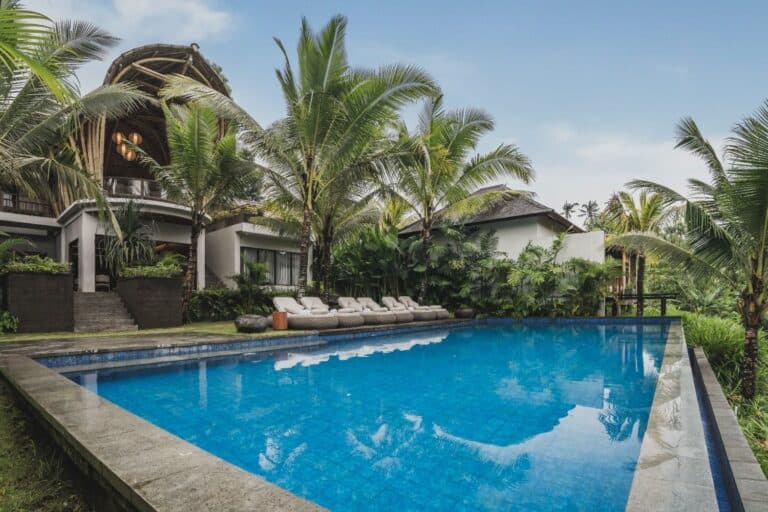
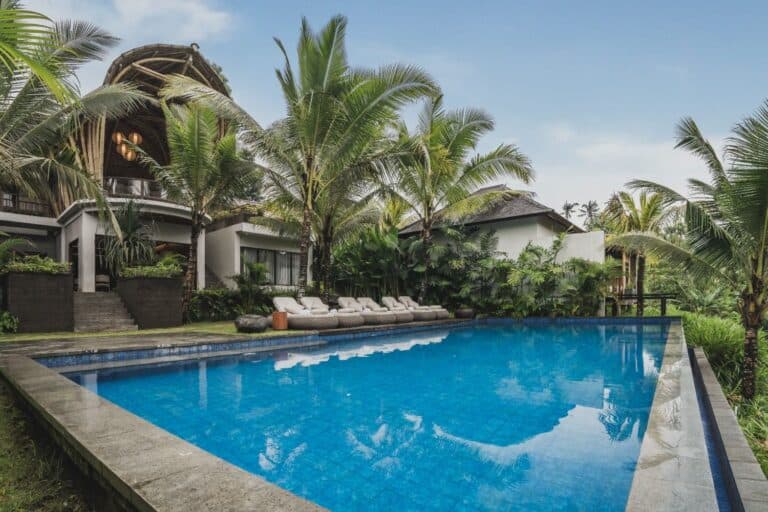
Set among the rice fields of Payangan, Ubud, Maar Resort is built with bamboo, reclaimed wood, and local stone that fit the surrounding landscape. Villa options include units with private pools and others with Jacuzzis, so you get privacy while staying close to the greenery.
Staying at an eco-friendly villa does not always mean paying more, and Maar Resort shows this well. As with any property, feel free to ask the team where their building materials and food ingredients come from. Check availability and book your villa through the official Maar Resort website.
2. Equipoise Resort
Located in Kenderan Village, the adults-only Equipoise Resort has bamboo architecture that follows the contours of the rice terraces. At the Terra Verte restaurant, guests can enjoy 180-degree views of the paddies.
The resort also hosts workshops with local artisans, covering batik, wood carving, and silver crafting. These activities reflect Tri Hita Karana philosophy by supporting harmony with local culture and community that many conscious travelers look for.
A lifestyle in tune with nature comes with modern comforts, including private pools and a hammam spa. Plan your quiet getaway at this eco-luxury villa in Bali and book directly through the official Equipoise Resort website.
Choosing an Eco Stay in Bali That Lives Up to the Label

A genuine eco stay in Bali can be verified through five checks: building materials, water and energy use, waste and plastic, food sourcing, and support for local staff and culture. Rely on certifications that you can confirm independently, such as EarthCheck, Travelife, Biosphere, or Green Globe. Treat vague claims, missing data, and an “eco” label with nothing behind it as red flags.
To apply this checklist, evaluate Maar Resort and put the questions above to its team. You can book Ini Vie Hospitality’s official website directly for better rates. For an adults-only option, Equipoise Resort is a suitable alternative.